Why Memphis Yards Flood After Heavy Rain—and How to Fix It Permanently
Introduction: Flooding Isn’t “Normal”—It’s a System Failure
If your yard turns into a pond every time Memphis gets a hard rain, it is rarely “just the way it is.” In most cases, flooding is the result of one or more correctable system failures—soil conditions, grading issues, unmanaged runoff, or drainage systems that were never designed with a true outlet.
At Green Earth Landscaping & Irrigation in Germantown, TN, we see the same patterns repeatedly across Germantown, Collierville, East Memphis, Cordova, Bartlett, and surrounding areas. The good news: when the cause is properly diagnosed, permanent solutions are achievable.
Why Flooding Is So Common in Memphis
Memphis-area soils shed water faster than homeowners expect
Much of the Memphis region sits on loess-based soils—fine, compactable silts that do not absorb water efficiently once disturbed by construction. Even lawns that appear healthy can repel water during heavy rainfall.
Builder grading is rarely designed for long-term drainage
Initial grading often meets minimum code, not long-term performance. Over time, settling, erosion, and landscape changes flatten slopes and trap water.
Urban surfaces increase runoff volume and speed
Roofs, driveways, patios, and compacted lawns reduce infiltration. When water arrives faster than it can exit, flooding occurs—even in yards that never flooded years ago.
The 6 Most Common “Fixes” That Don’t Work (or Don’t Last)
1. French drains installed without a real outlet
A drain with nowhere to discharge eventually fails. This is the most common drainage mistake we see.
2. Adding soil or mulch to low spots
This hides the problem temporarily but often redirects water toward foundations or creates new pooling areas.
3. Replacing sod without correcting saturation
If the soil stays wet, turf will thin, rot, or fail again—regardless of sod quality.
4. Downspout extensions without a drainage plan
Moving water “somewhere else” only works if that location can handle the volume.
5. Surface drains without grading corrections
Surface drains collect water; they do not fix improper slopes.
6. Ignoring irrigation-related oversaturation
Broken heads, poor scheduling, and inefficient systems often contribute to flooding between rain events.
The Green Earth Diagnostic Process (How Permanent Fixes Start)
Permanent solutions begin with understanding how water actually moves across your property.
What we evaluate
Water entry points and flow paths
Yard slope and micro-grading
Soil compaction and saturation zones
Downspout discharge locations
Irrigation system leaks, coverage, and scheduling
This diagnostic-first approach prevents unnecessary work and ensures solutions last.
Drainage and Grading services in Germantown and Memphis
Permanent Solutions (And When Each One Is the Right Answer)
Grading corrections
Best when water has no clear exit path. Proper grading creates intentional movement away from structures and problem areas.
Area drains (catch basins)
Effective for low spots and landscape beds when tied to a properly sized discharge line.
French drains
Used for subsurface saturation problems—only effective when slope, aggregate, fabric, and outlet are engineered correctly.
Downspout integration
Roof runoff contributes significant volume. Managing it correctly often solves “mystery flooding.”
Smart irrigation adjustments
Correcting overspray, leaks, and schedules prevents soil from staying saturated before storms.
Smart irrigation adjustments
When You Should Act (And What Waiting Can Cost)
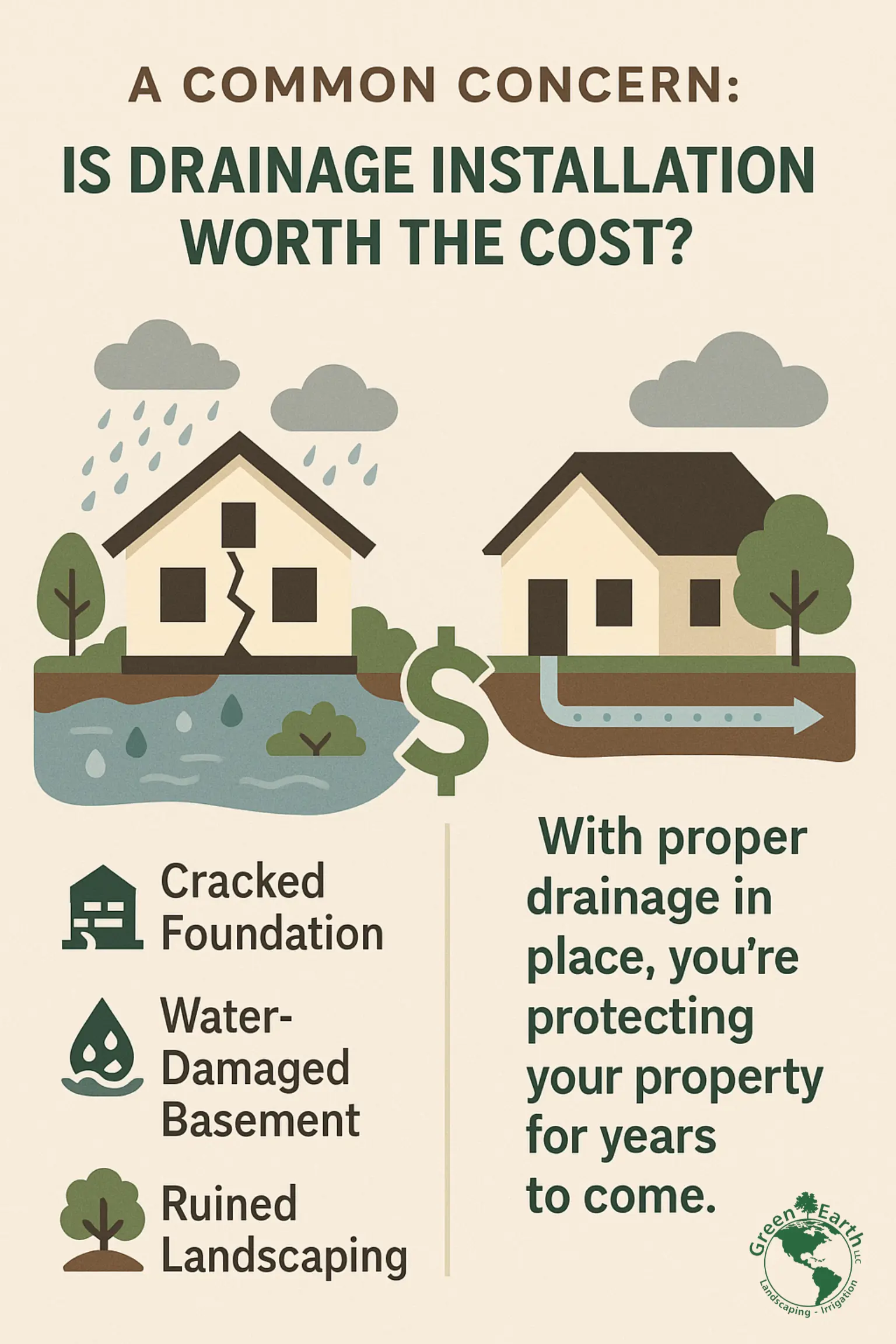
If your yard floods multiple times per season, delaying repairs can lead to:
Long-term consequences
Turf decline and soil compaction
Erosion and washouts
Increased mosquito activity
Foundation-adjacent moisture risk
Hardscape movement or failure
Early correction is almost always less expensive than rebuilding later.
What It Typically Costs (High-Level Expectations)
Costs depend on yard layout, discharge options, and complexity.
General ranges
Downspout corrections: lower cost, high impact
Area drains and piping: moderate
French drains and grading packages: moderate to higher
Full regrading and restoration: higher, but sometimes necessary
A diagnostic assessment is the fastest way to determine the right scope.
Frequently Asked Questions
Why does my yard flood even when it dries out quickly afterward?
Because surface water becomes trapped before it can exit—even if soil drainage improves later.
Is a French drain always the answer?
No. French drains solve specific problems and fail when used incorrectly.
Can my sprinkler system make flooding worse?
Yes. Leaks and poor programming can keep soil near saturation.
Should I worry about water near my foundation?
Yes. Water should always be directed away from the home.
Call to Action
If you are tired of guessing and want a permanent plan, schedule a Drainage & Irrigation Diagnostic with Green Earth Landscaping & Irrigation.
We proudly serve Germantown, Collierville, East Memphis, Cordova, Bartlett, and the greater Memphis area.