The 2026 Guide to Climate-Resilient Landscaping in Memphis
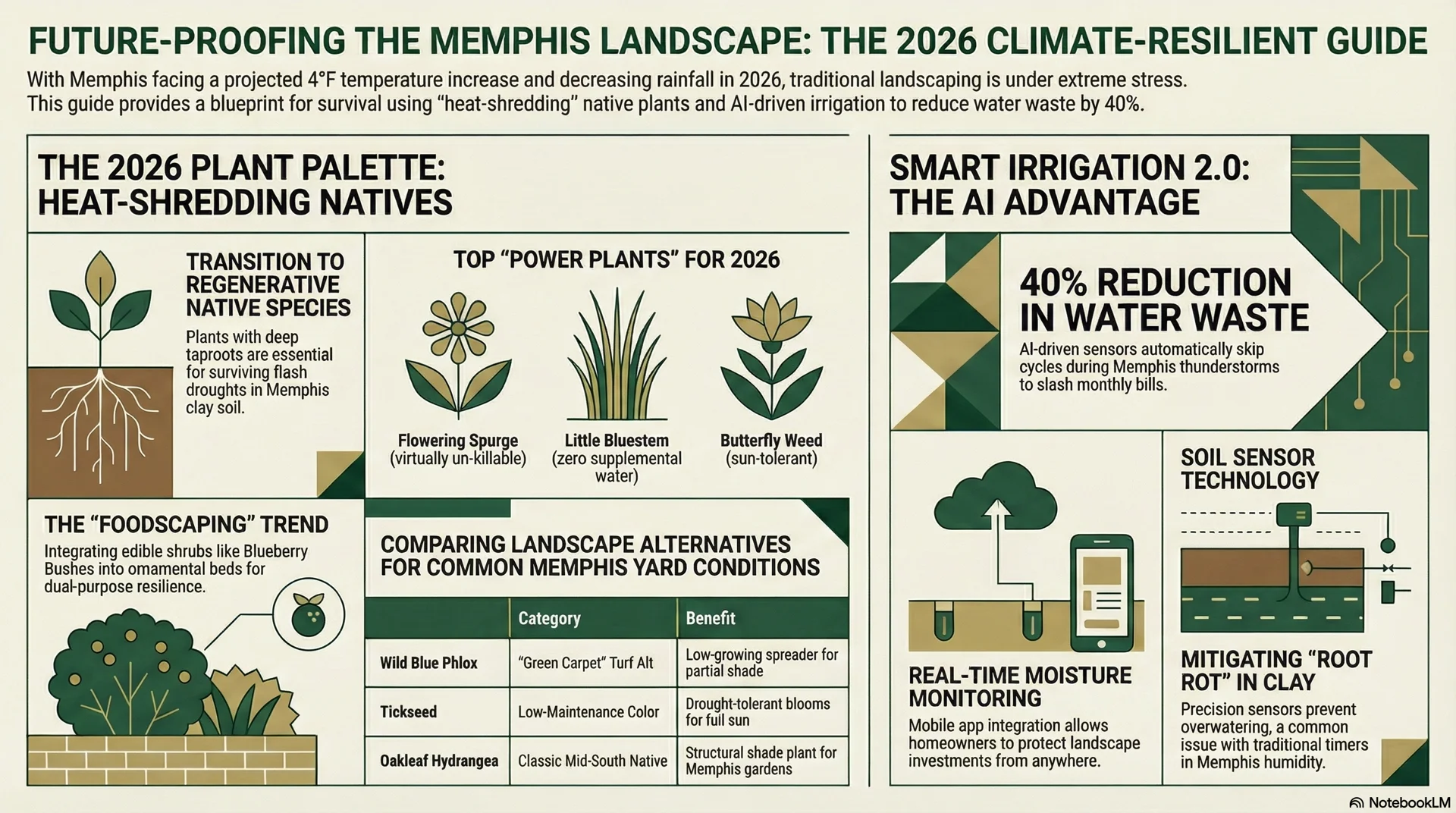
TL;DR (Key Takeaways): With the Mid-South facing a projected 4°F temperature increase and 1" below-average rainfall this April, traditional Memphis landscaping is under stress. To ensure a thriving yard in 2026, homeowners should prioritize native "heat-shredding" plants, integrate foodscaping elements, and upgrade to AI-driven irrigation sensors that reduce water waste by up to 40%.
What are the best climate-resilient plants for Memphis in 2026?
In 2026, the most successful Memphis landscapes are moving away from "water-thirsty" ornamentals and toward Regenerative Native Species. Because our local clay soil retains heat, choosing plants with deep taproots is essential for surviving the flash droughts expected this summer.
We recommend sourcing these five "Power Plants" during the upcoming Dixon Garden Fair (April 16-18) or the Memphis Botanic Garden Plant Sale:
Flowering Spurge (Euphorbia corollata): A Memphis designer favorite for 2026. It is virtually "un-killable" once established and thrives in harsh chalk or clay barrens.
Little Bluestem (Schizachyrium scoparium): This native grass provides architectural height and turns a stunning bronze in the fall, all while requiring zero supplemental water after its first season.
Butterfly Weed (Asclepias tuberosa): Essential for 2026 pollinator corridors; its vibrant orange blooms handle full Memphis sun without wilting.
2026 Memphis Native Plant Comparison Table
| Plant Name | Light Requirement | Growth Habit | 2026 Trend Category |
| Tickseed (Coreopsis) | Full Sun | 1-2' mounding | Low-Maintenance Color |
| Wild Blue Phlox | Part Shade | 6-12" spreader | "Green Carpet" Turf Alt |
| Blueberry Bushes | Full Sun | 3-5' shrub | Foodscaping / Edible |
| Oakleaf Hydrangea | Shade/Part Sun | 6-8' structural | Classic Mid-South Native |
How can smart irrigation save money during a dry Memphis spring?
With the 2026 spring weather forecast trending drier than normal, "set-it-and-forget-it" timers are becoming a liability. Smart Irrigation 2.0 uses local weather station data to automatically skip cycles during our sudden April thunderstorms and increase volume during peak humidity.
The ROI of AI-Controlled Watering:
Water Savings: Systems like the Rachio 3 or the new IrriSense 2 (2026 SEAL Award Winner) can cut monthly water bills by 30-40% by targeting "Micro-Zones."
Plant Health: Smart sensors prevent Root Rot, a common issue in Memphis clay soil when traditional systems overwater during humid spells.
App Integration: Homeowners can now monitor soil moisture levels in real-time from their phones, ensuring their landscape investment is protected even while traveling.
Ready to Future-Proof Your Property?
At Green Earth Landscaping & Irrigation, we specialize in the technical side of beauty. Whether you need a 2026 Irrigation Audit or a full Climate-Resilient Design, our team is ready to prepare your property for the heat ahead.
Frequently Asked Questions about Memphis Climate-Resilient Landscaping
Q: What are the best heat-tolerant plants for Memphis in 2026? A: For the 2026 season, we recommend native species like Flowering Spurge, Little Bluestem, and Butterfly Weed. These plants are specifically adapted to the Mid-South's clay soil and the projected 4°F temperature increase, requiring significantly less water than traditional ornamentals.
Q: How does a Smart Irrigation 2.0 system save money? A: Smart Irrigation 2.0 uses AI-driven weather sensors to monitor real-time local Memphis data. By automatically skipping watering cycles during rainfall and adjusting for high-humidity days, these systems can reduce water waste by up to 40%, paying for themselves in utility savings over a single season.
Q: Can I mix edible plants into my existing flower beds? A: Yes. This 2026 trend, known as "Foodscaping," involves integrating high-value edibles like Blueberry bushes or Herbs into your ornamental landscaping. This creates a functional yard that is both beautiful and productive, provided you group them with plants that have similar water and sunlight requirements.