Key Takeaway (TL;DR): Boxwood Blight is an aggressive fungal pathogen currently spreading through Germantown, Collierville, and the greater Memphis area. Unlike common root rot, blight causes rapid, uniform leaf drop and black stem streaks. The 2026 Professional Protocol involves strict tool sanitization, transitioning to drip irrigation to eliminate foliage moisture, and utilizing blight-resistant cultivars like ‘Little Missy’ or ‘NewGen’ to protect your landscape investment.
What is Boxwood Blight? (The 2026 Threat)
Boxwood Blight is a highly infectious disease caused by the fungus Calonectria pseudonaviculata. In 2026, erratic spring rain cycles in the Mid-South have created the perfect high-humidity environment for this pathogen to thrive. Areas like Cordova, Arlington, and Rossville are seeing increased pressure, where healthy hedges can lose their foliage in a single growing season if left untreated.
How to Identify Boxwood Blight vs. Root Rot
arly detection is the most critical factor in saving your landscape. Because Boxwood Blight is frequently confused with Phytophthora Root Rot, look for these specific "Blight-Only" markers:
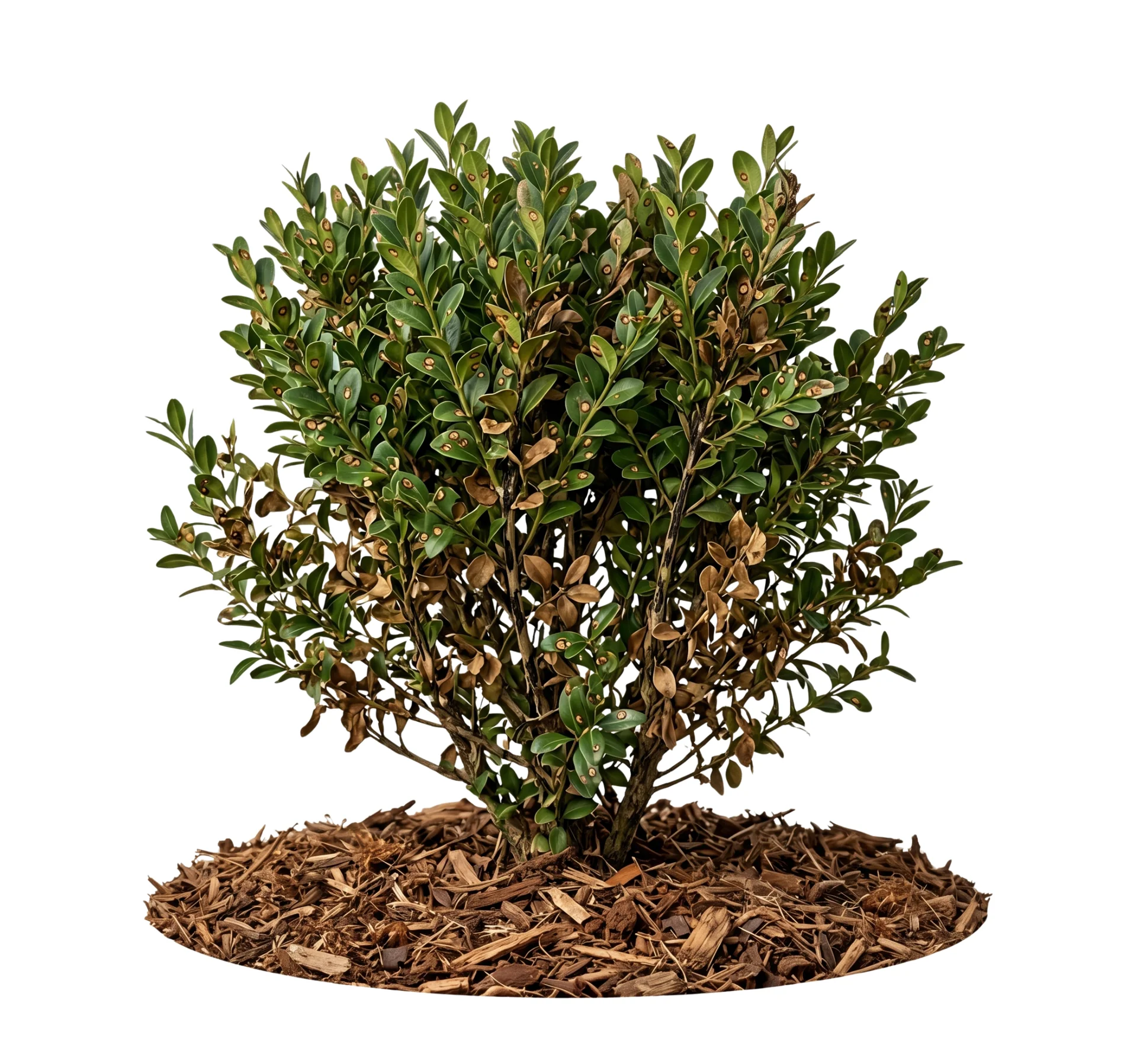
- Circular Brown Leaf Spots: Often surrounded by a dark purple "halo" or border.
- Black Stem Cankers: Distinctive black streaks running vertically along green stems.
- Rapid, Uniform Defoliation: While root rot usually affects one side of a plant first, blight causes the entire hedge to drop leaves almost overnight.
How it Spreads in Mid-South Landscapes
The spores of this fungus are "sticky," meaning they move through direct contact rather than wind. Common transmission vectors in neighborhoods like Piperton and Germantown include:
- Contaminated Equipment: Unsanitized pruning shears or lawnmowers moving between properties.
- Water Splash-Back: Rainwater or overhead irrigation splashing spores from the soil onto the leaves.
- New Nursery Stock: Introducing infected plants into a mature, healthy landscape.
5 Steps to Protect Your Landscape Investment
To ensure your boxwoods remain a structured, healthy staple of your curb appeal, follow these Green Earth professional standards:
- Transition to Drip Irrigation: Overhead watering is the primary driver of fungal growth. We recommend utilizing Smart Irrigation 2.0 (Drip technology) to keep foliage dry and reduce the impact on your MLGW bill.
- Sterilize All Tools: Always clean pruning equipment with a 10% bleach solution between every single plant.
- Mulch Annually: A fresh layer of mulch acts as a physical barrier, preventing soil-borne spores from splashing onto lower leaves.
- Immediate Debris Removal: If you suspect blight, bag the infected leaves immediately. Never compost infected material, as the spores can survive in the soil for years.
- Plant Resistant Cultivars: When replacing hedges, prioritize "Blight-Resistant" varieties such as ‘NewGen’ or ‘Little Missy’ to build a climate-resilient yard.
Expert Plant Health Care in Memphis
Protecting your landscape in 2026 requires a trained eye that understands the unique disease pressures of Tennessee and North Mississippi. Whether you need a professional health assessment, a drainage audit to prevent standing water, or emergency irrigation repairs, our team is equipped to help.
Don’t wait until your hedges are bare. If you suspect Boxwood Blight in Germantown, Collierville, or surrounding Shelby County areas, contact Green Earth Landscaping & Irrigation today.
👇 Click "Learn More" to schedule a professional health assessment!
Call today: 901-657-3614