When a retaining wall starts to lean around Memphis, Germantown or Collierville, it is almost always one of two things. The water behind it has nowhere to go, or the footer under it was built poorly or never built at all. Some walls can be saved. A real repair means digging out the entire back side of the wall, though, and that is rarely worth it. If you are looking at an old railroad tie wall, rebuilding with block or poured concrete is usually the better long-term answer.
Green Earth LLC has built and replaced retaining walls across the Memphis area since 2012. Here is how we decide between repairing a wall and rebuilding it. You can also read more about our retaining wall repair and installation service.
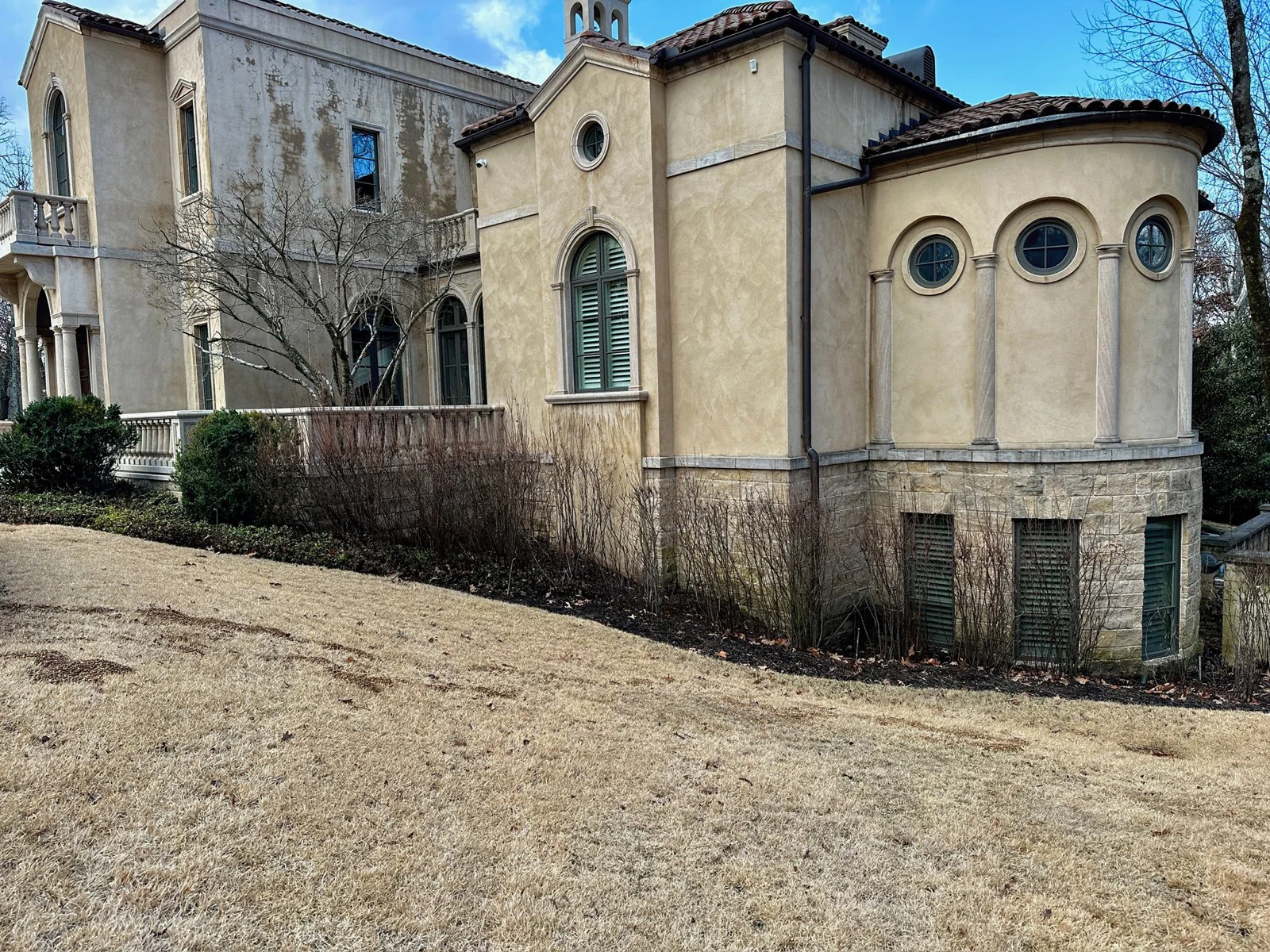
Stone veneer wall: before, the slope along the house
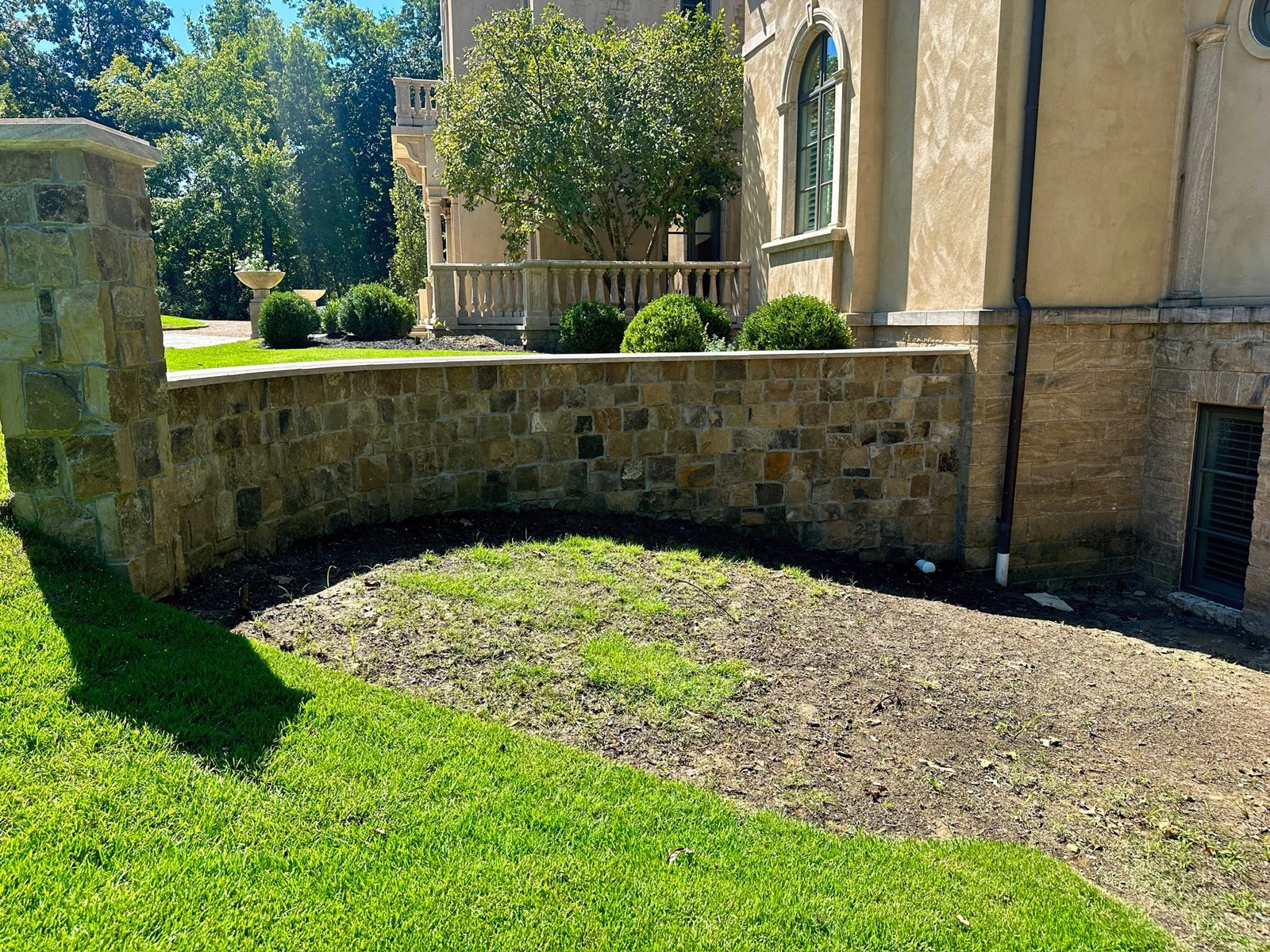
Stone veneer wall: after, stone veneer finish (2023)
Why Retaining Walls Fail in the Mid-South
When we walk up to a wall that is leaning, bulging or cracking, the cause is usually one of these:
- No proper drainage. Water builds up in the soil behind the wall and pushes on it every time it rains.
- Footers that are poorly installed, or missing. A wall is only as good as what it sits on. Without a solid foundation, it settles and tips.
- No filter fabric. A lot of the drainage problems we see start here. The drainage stone was never wrapped in filter fabric, so native soil washed into it, filled the gaps and stopped the water from moving. The wall ends up holding back water again.
In Germantown and Collierville, the two problems we run into most are the same ones: bad drainage and footers that were poorly installed or left out entirely.
Can a Leaning Retaining Wall Be Repaired?
Sometimes, yes. If the wall itself is sound and the real problem is drainage, we can dig out the entire back side, put in the drainage it should have had from the start and backfill it correctly.
That is a big job, and it rarely makes sense. It usually is not practical when:
- The wall sits against a driveway, a building, a fence or a neighbor's yard, so there is no room to dig.
- The footer is the problem. You cannot fix a missing footer from behind the wall.
- The wall material is near the end of its life anyway, like rotting timbers or railroad ties.
Our rule of thumb: if a wall is starting to bulge or crumble, it is generally time to replace it. A bulge usually means something was not done right when the wall was built.
When It Is Time to Rebuild
We have built a lot of railroad tie walls over the years. Sometimes that is what the situation calls for once you factor in budget and wall height. We just don't recommend them as the long-term choice, and most of the walls we tear out are railroad tie walls. Treated timber and railroad tie walls typically last about 20 to 30 years, and often less in our hot, humid Mid-South climate as the wood rots. A properly built segmental block or poured concrete wall with good drainage is designed to last 75 years or more. Old creosote-treated ties also are not recommended near vegetable gardens or where kids play.
If a tie wall is what fits your budget and your slope right now, that is a fair choice. Just go in knowing how long it will last. The mistake that costs homeowners the most down the road is expecting a cheaper wall to last like a block or concrete one.
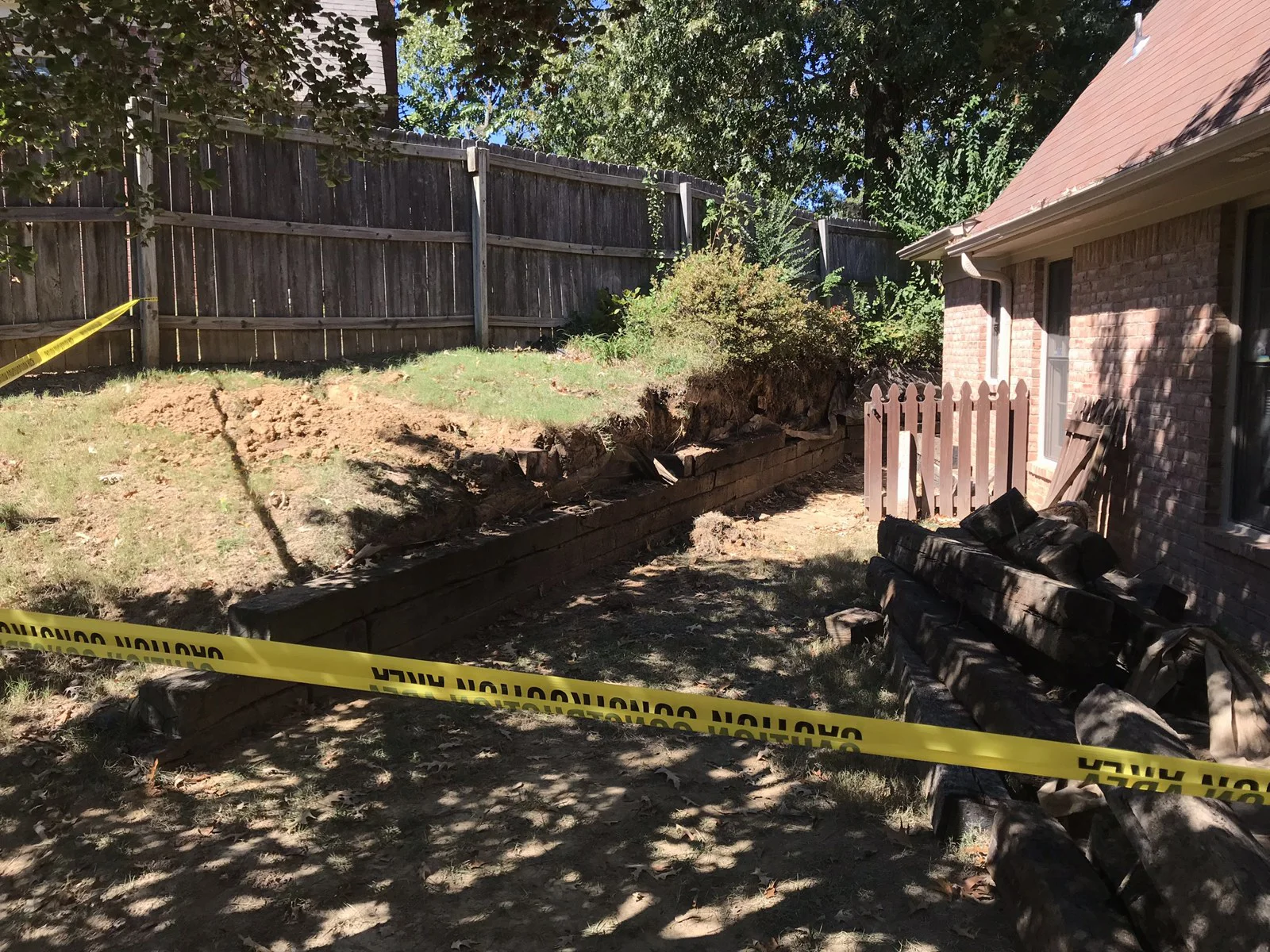
A failing railroad tie wall: leaning and taped off
A rebuild is usually the right call when:
- The wall is railroad ties or timber and the wood is soft, split or rotting.
- The wall was built with no footer.
- The wall is leaning and there is no room to dig out the back side.
- The wall is taller than it should be for how it was built and now needs an engineered design.
Case Study: A Large Stone Veneer Retaining Wall
This job was a large retaining wall with a stone veneer finish in North Mississippi. Most of the retaining walls we build take 2 to 7 days, and some larger ones take longer.
There was no wall here before, just a slope running down along the side of the house. This was a brand new wall, following a design by BFT Land Design. We started with a really large footer. Before we built up, we waterproofed the basement wall, since the new wall and backfill would sit right against it. Then we built the wall in block and finished the face in natural stone veneer. The homeowner was thrilled with how it turned out.
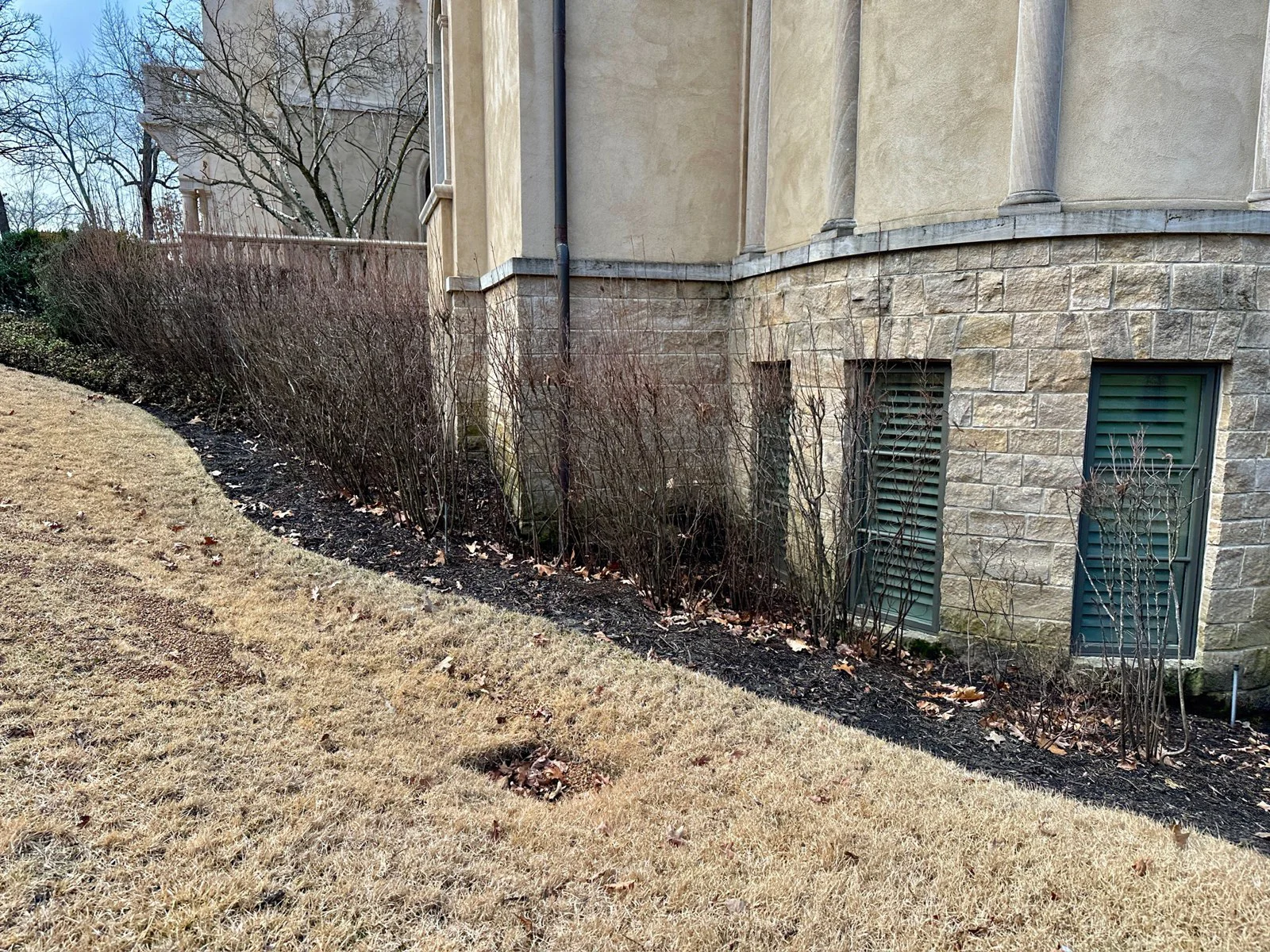
Stone veneer wall: before, the slope beside the basement wall
"Green Earth was able to reclaim my sloped yard into a flat surface my kids can play on."
Brian M., Green Earth customer
How We Build Retaining Walls That Last
Every wall starts with the specifics of the site. An engineer is not always needed, but on complex walls we require an engineer's design. Every wall we build includes:
- A foundation. A properly installed footer, sized to the wall.
- Drainage aggregate. Clean stone behind the wall so water can move.
- Drain pipe wrapped in filter fabric. The fabric keeps native soil out of the stone so the drainage keeps working.
If water is also pooling out in the yard, our guide to fixing standing water and yard drainage covers the rest of the property.
Many walls also need geogrid. It is laid in layers back into the soil behind the wall, and it uses the weight of that soil to hold the wall in place and keep it from shifting.
For materials, we follow the engineered drawings and the property itself. Some walls call for block, others for poured concrete. When a homeowner wants the look of brick, we put brick on the face of a block wall. The block does the structural work and the brick is the finish.
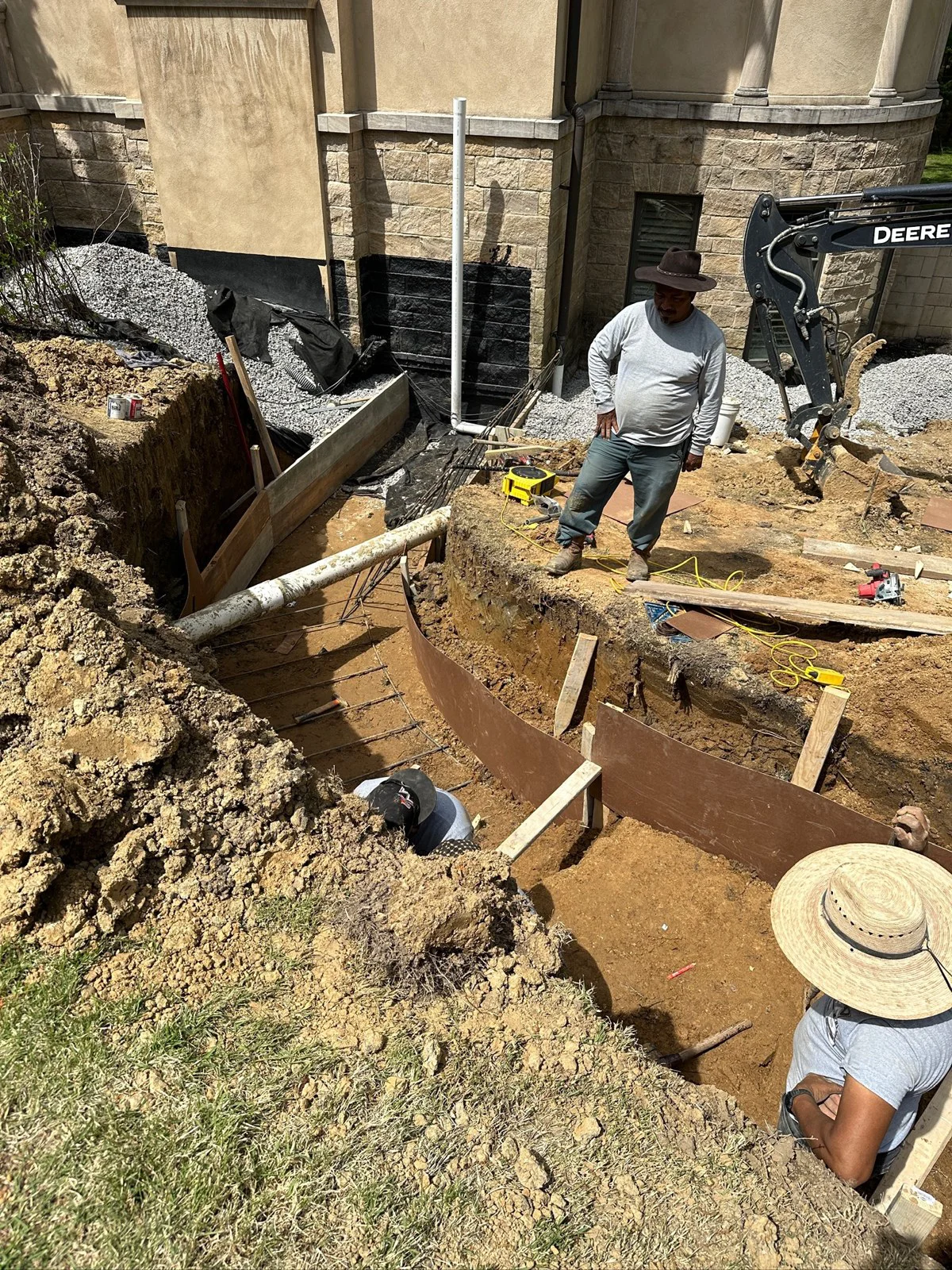
Stone veneer wall: excavation and footing
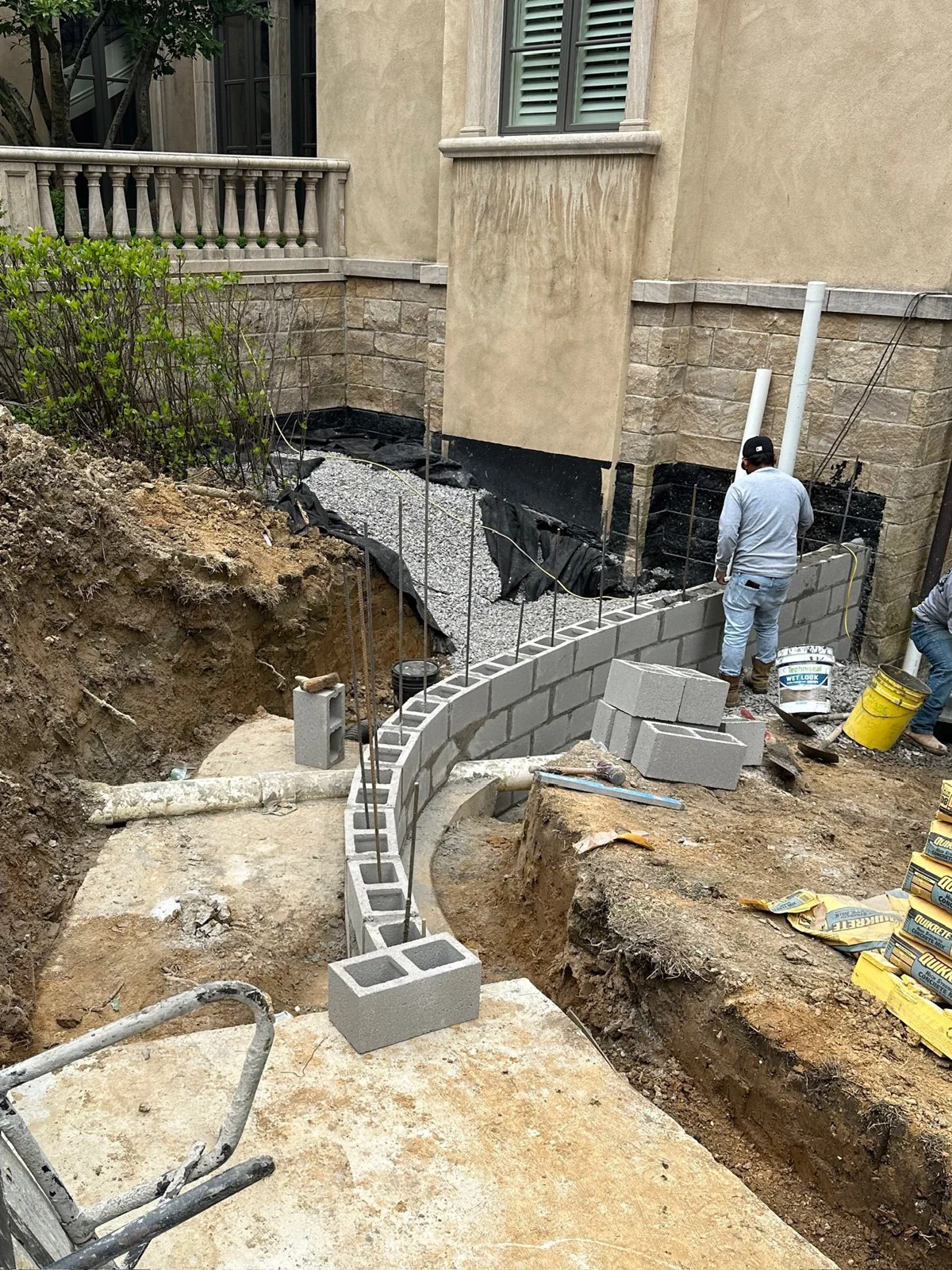
Stone veneer wall: block wall going up
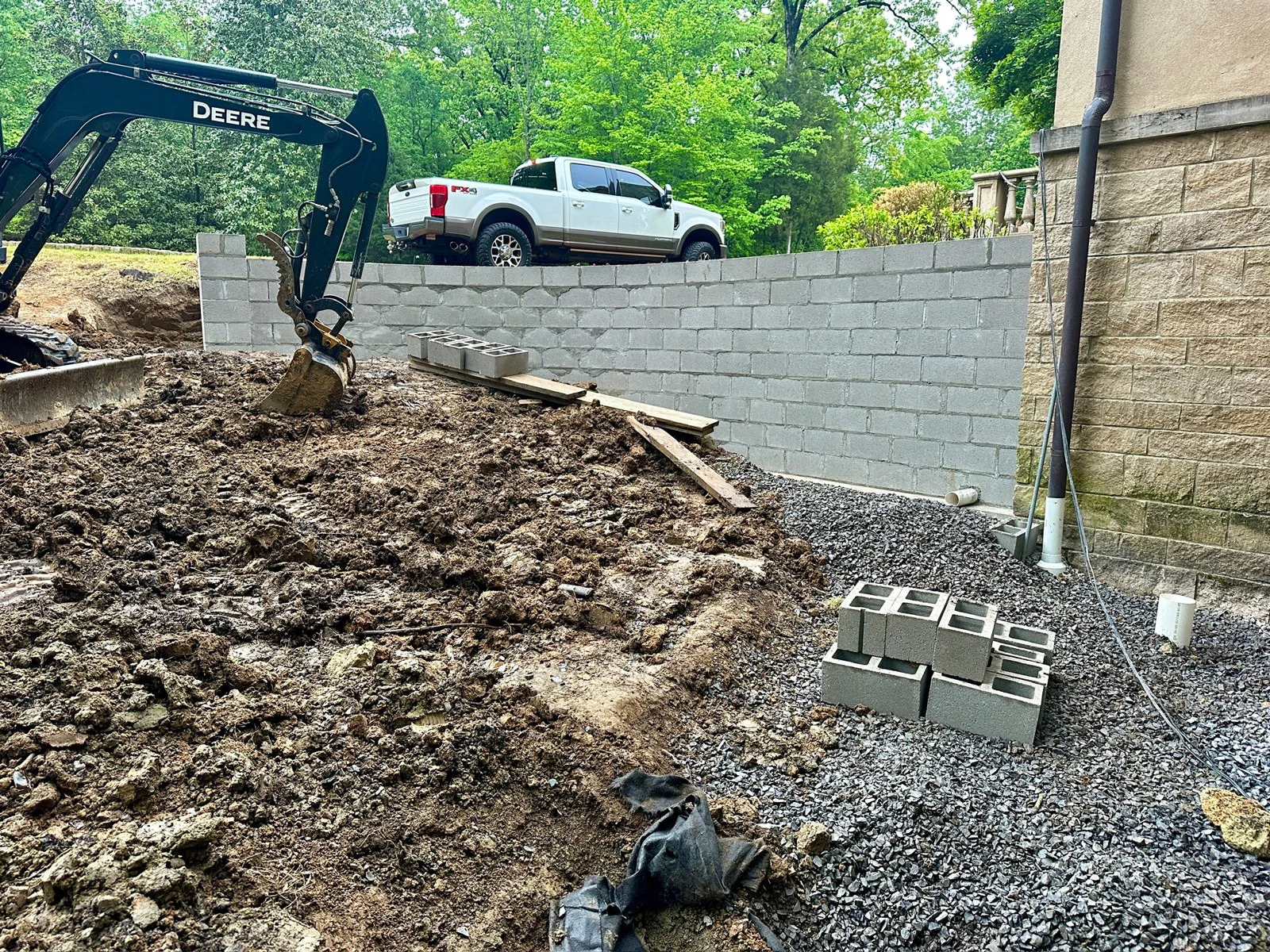
Stone veneer wall: block wall and backfill
Transforming Sloped Lawns Into Usable Yard Space
Not every retaining wall is about fixing a problem. At this home, part of the back yard sloped too much to use. We built a retaining wall around the area and leveled the ground behind it, so the raised vegetable beds now sit on flat, usable ground.
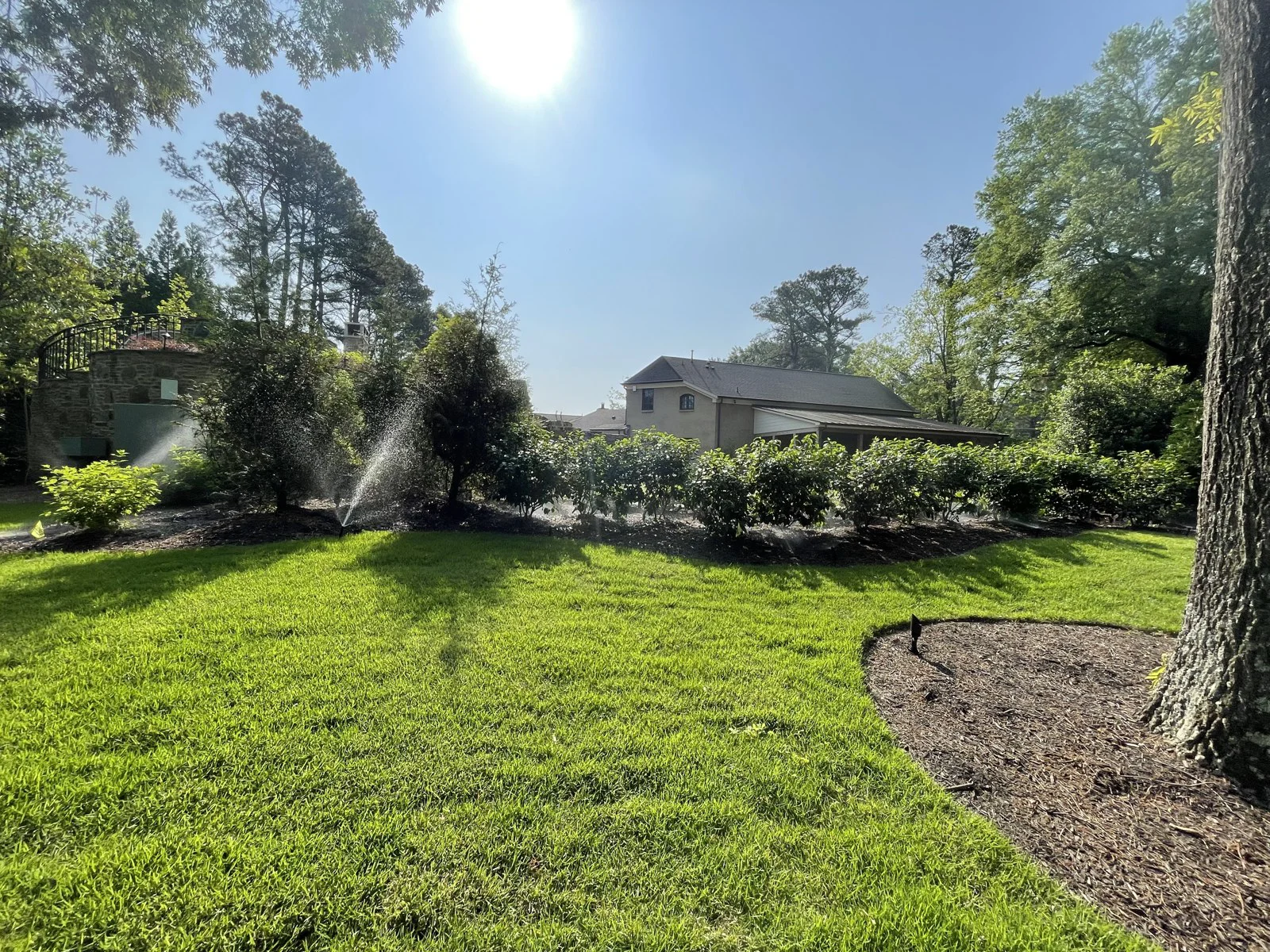
Vegetable garden job: before, sloped lawn (2022)
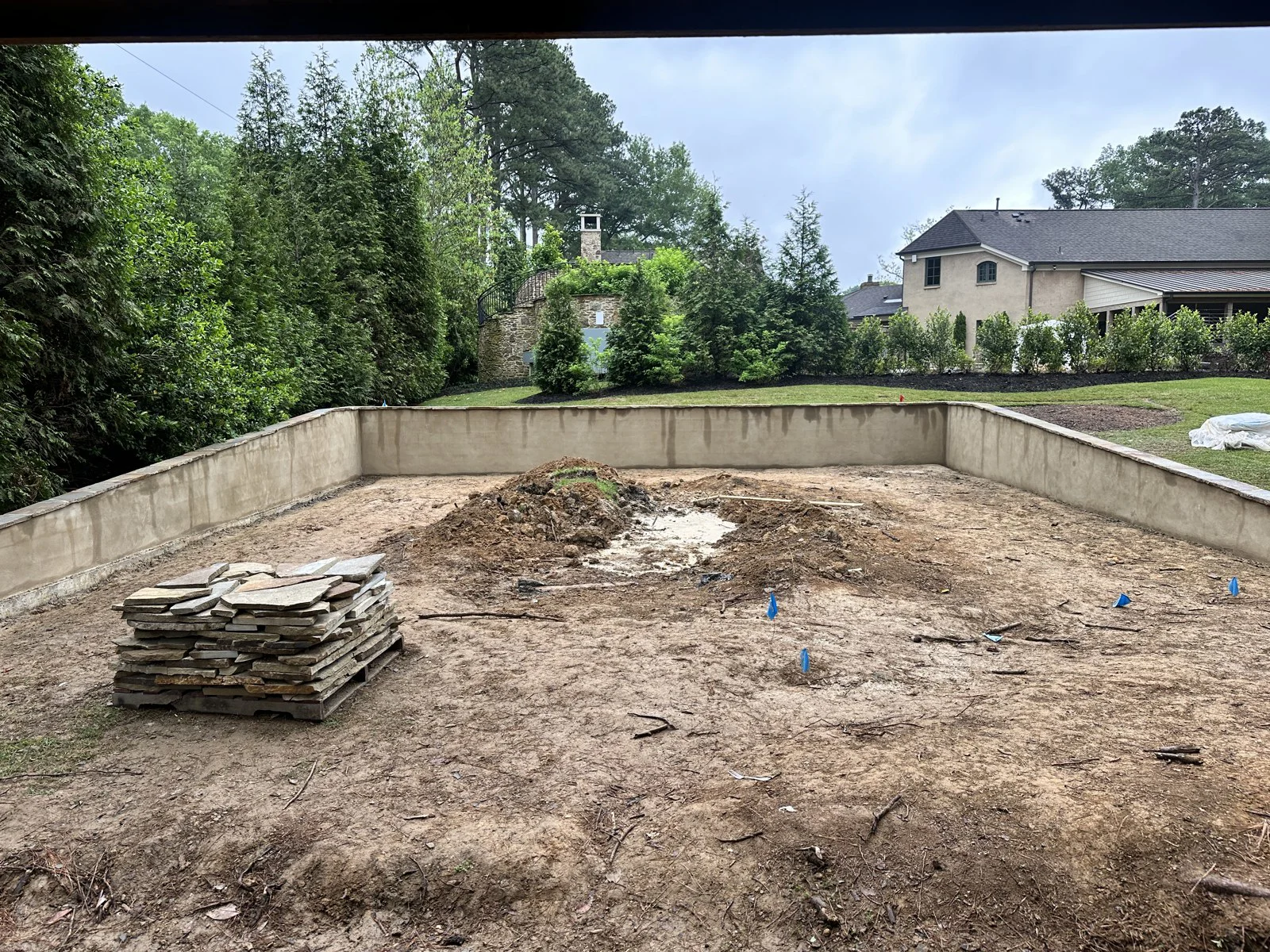
Vegetable garden job: wall built, area leveled
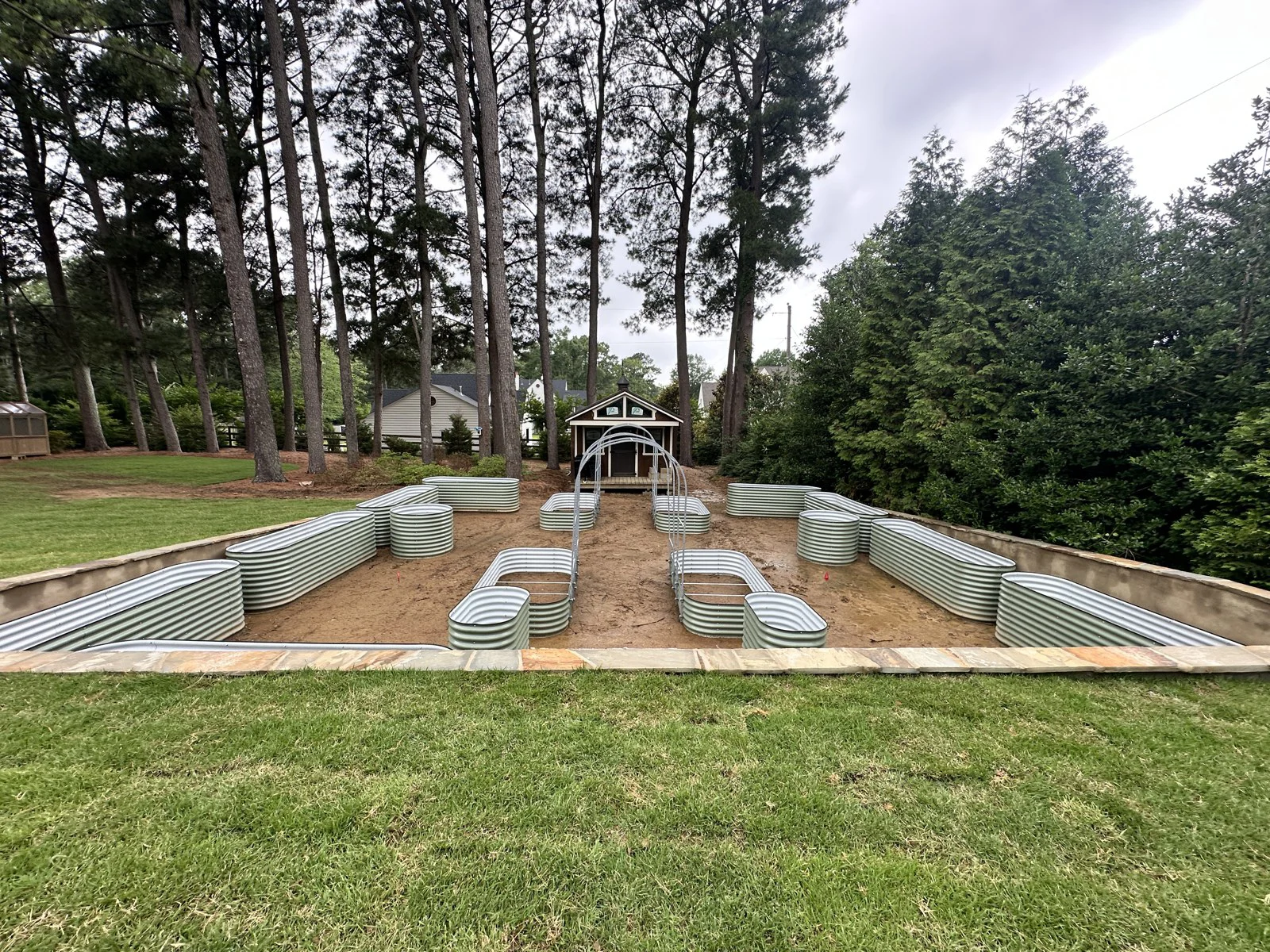
Vegetable garden job: raised beds placed
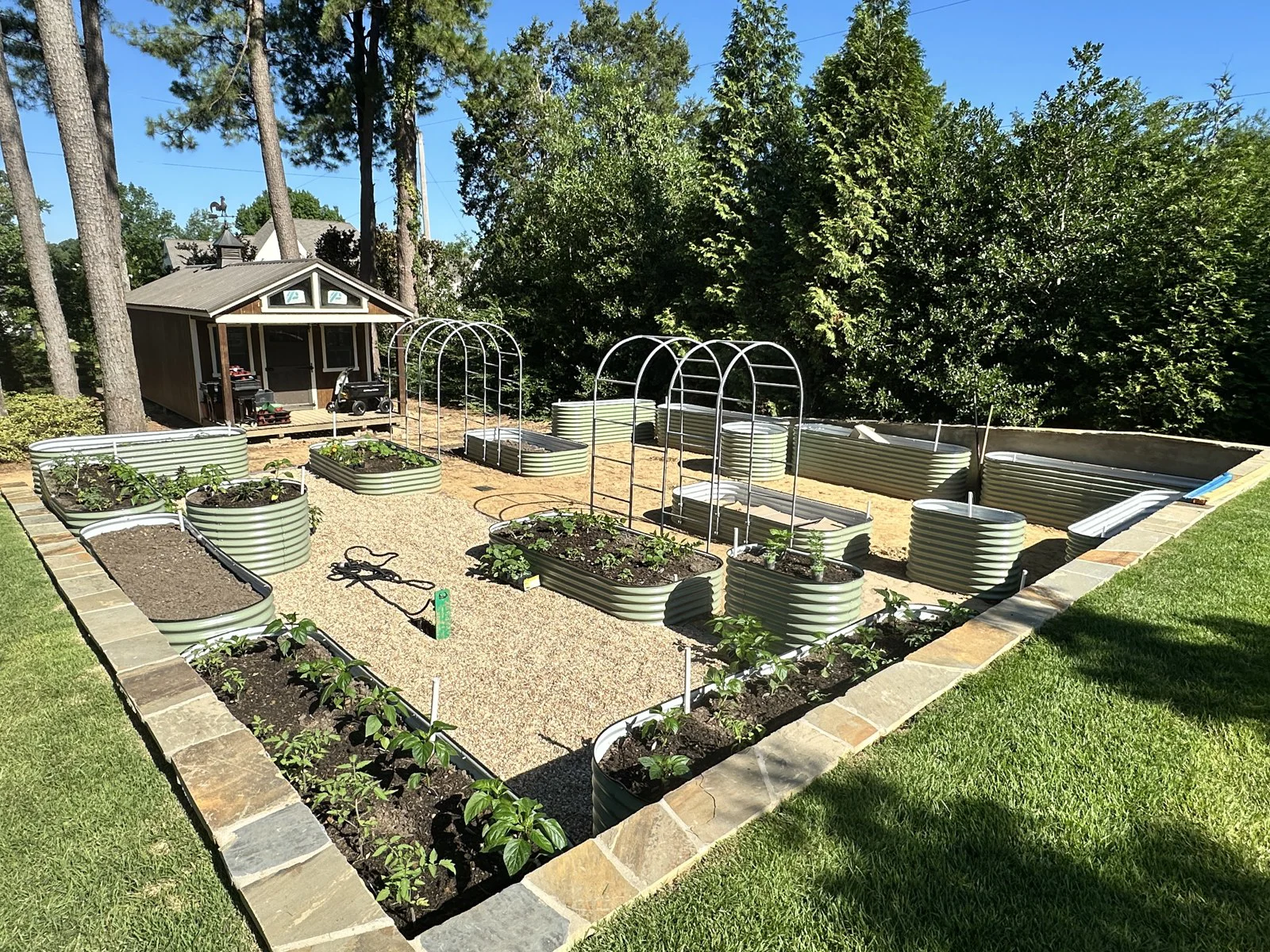
Vegetable garden job: planted, side view
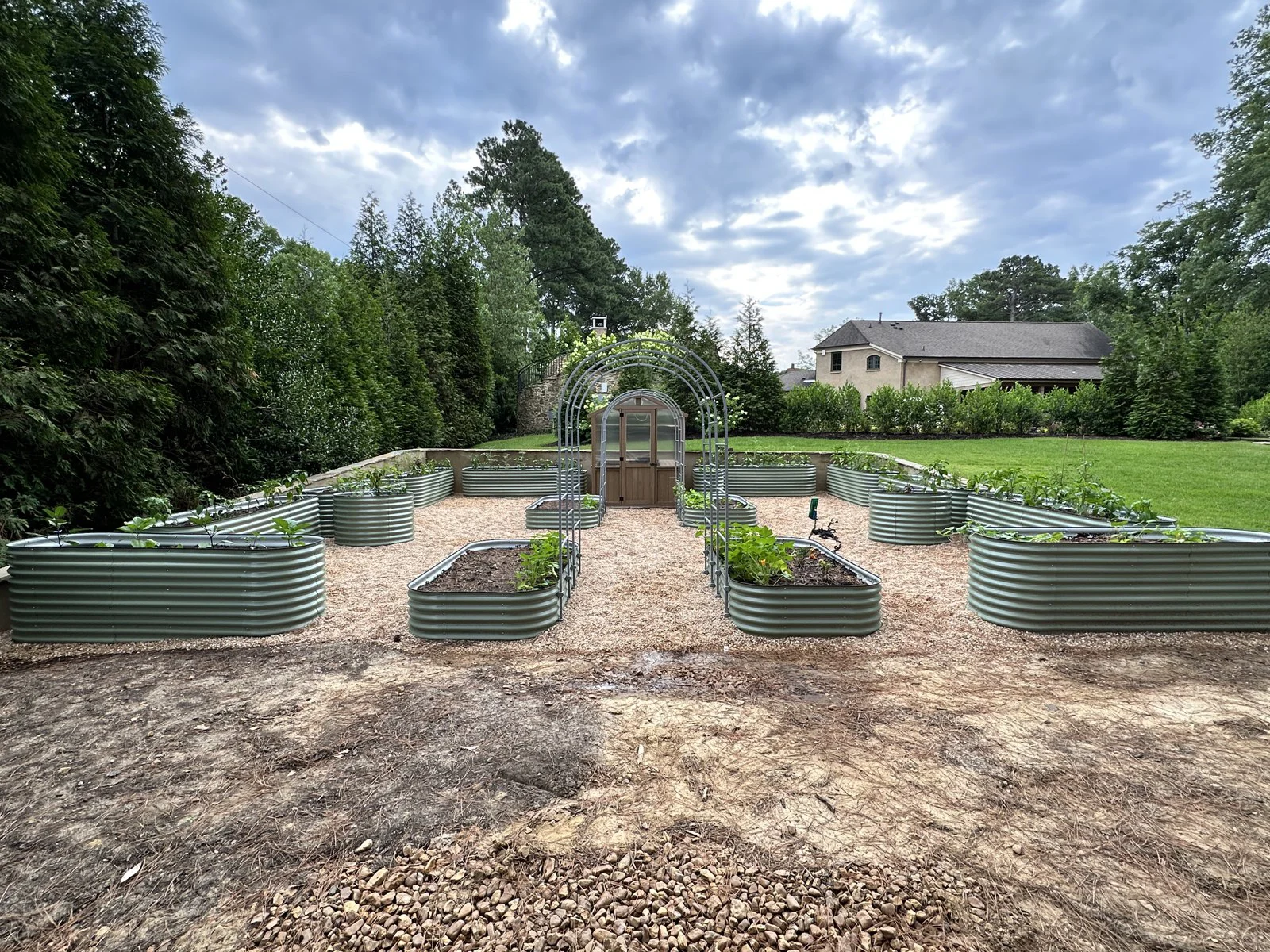
Vegetable garden job: planted, front view (2024)
Do You Need an Engineer or Building Permit in Shelby County?
Most small landscape walls don't need an engineer. On complex walls, where there is more at stake if something goes wrong, we require one. Once a wall gets taller, or it's holding up a driveway, a road or a building, the rules change. In Memphis and unincorporated Shelby County, a wall over 3 feet tall, measured from finished grade to the top of the wall, has to be designed by a Tennessee-licensed engineer and needs a permit. When a wall crosses that line, we bring in the engineer and pull the permit for you, so you don't have to manage it. Rules vary by city, and Germantown and Collierville tend to be the strictest, so we check with the local building department before we build.
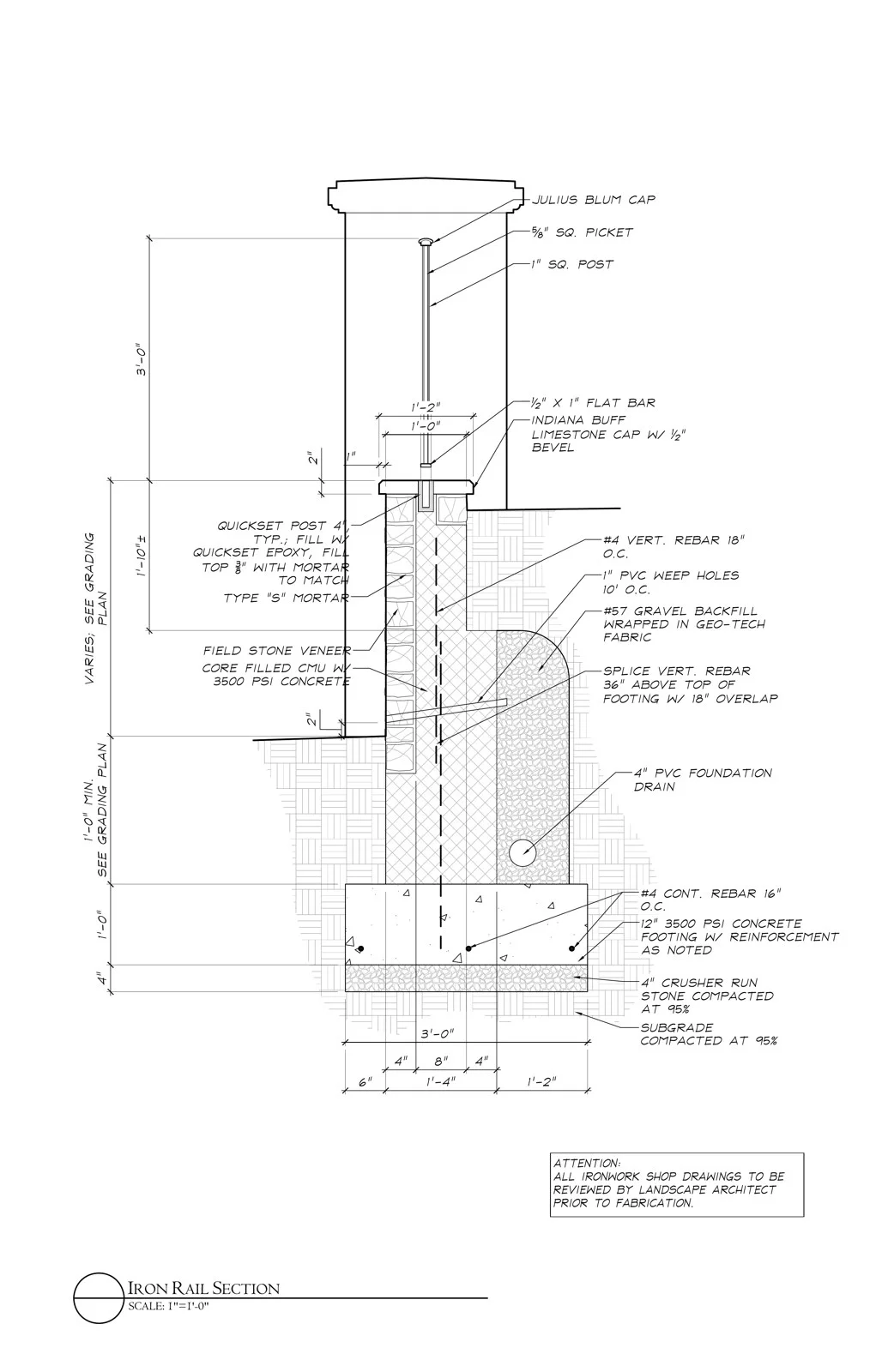
Stone veneer wall: section drawing by BFT Land Design
Retaining Wall FAQs
How do I know if my retaining wall needs repair or a rebuild?
Look at what is causing the problem. If the wall is sound and the issue is drainage, it can sometimes be repaired by digging out the back side and adding proper drainage. If the footer is bad or missing, the wall is rotting timber or railroad ties, or there is no room to dig, a rebuild is usually the better answer.
Why is my retaining wall leaning?
Most leaning walls we see around Memphis have poor drainage, a badly installed footer or no footer at all. Water trapped behind the wall pushes it forward, and a weak footer lets it tip.
Can you replace an old railroad tie wall with block or concrete?
Yes. Most of the walls we tear out are railroad tie walls. We replace them with block or poured concrete, built on a footer with drainage stone and drain pipe wrapped in filter fabric, and with an engineered design when the height calls for it.
How long does a retaining wall last?
Railroad tie and treated timber walls typically last about 20 to 30 years, often less in our hot, humid climate. A properly built segmental block or poured concrete wall with good drainage is designed to last 75 years or more.
Do I need an engineer for my retaining wall in Memphis?
Most small landscape walls don't. On complex walls with more liability, we require one. In Memphis and unincorporated Shelby County, walls over 3 feet tall from finished grade, or walls holding up a driveway, road or building, need a Tennessee-licensed engineer's design and a permit. Rules vary by city, so we check with the local building department before we build.
Do you build retaining walls in North Mississippi?
Yes. We have built walls of all shapes and sizes in Olive Branch, Southaven and Hernando, from cinder block and poured concrete walls to boulder walls and segmental block. One of the larger walls we have built down there is a big retaining wall finished in natural stone veneer.
Do you offer a warranty on retaining walls?
Yes. Every situation is different, but if we installed an engineered wall and it starts failing, we will fix it.
How much does a retaining wall cost?
Every wall is priced after we see the slope, the soil, the height and the access. Estimates are typically free. If an engineer is involved there may be a fee, but we can usually give you a solid budget number ahead of time.
Call Green Earth
If your wall is leaning, cracking or made of old railroad ties, have it looked at before the next heavy rain. We repair and rebuild retaining walls across Memphis, Germantown, Collierville and Arlington, and we will tell you straight whether yours can be repaired or needs to come out.
We offer free on-site estimates across the Mid-South. If your project requires formal structural engineering drawings, any applicable review fees are communicated upfront so you have an accurate budget before work begins.
Call Green Earth LLC at (901) 657-3614, or see how we build retaining walls.
Green Earth LLC, 1183 Midas Cove, Cordova, TN 38018. (901) 657-3614.