
Quick Answer
- Start your real leaf cleanup once 50 to 70 percent of the leaves in your yard have dropped, usually the first two weeks of November in Memphis, not the day the first leaves fall.
- A thin scattering (under 20 percent lawn coverage) can be mulched in place with a mower; anything heavier needs to come off the grass.
- Wet, matted leaves left on fescue or bermuda for more than a few days block light and trap moisture, which invites brown patch and other lawn disease.
- Plan to finish the last full cleanup before the first hard freeze, typically mid-to-late November in the Mid-South.
The right time to start fall leaf cleanup in Memphis is once 50 to 70 percent of the leaves in your yard have come down, not the day the first ones hit the ground. Raking too early means doing half a job and starting over again in two weeks. Waiting too long is worse. A wet layer of leaves left sitting on bermuda or fescue for even a few days blocks sunlight and traps moisture, and by the time you finally clear it the grass underneath is thin, yellow, or covered in disease. Fall cleanup in the Mid-South is really a two-to-three week window, not a single Saturday, and getting the timing right protects the lawn you spent all season growing.

Why Raking Too Early Wastes Your Weekend
Memphis sits in a transition zone where oaks, maples, and sweetgums drop leaves on their own schedule between early October and late November. Clearing the yard the first weekend you see color on the ground means raking maybe a third of the season's leaves, then doing the exact same job again ten days later when the rest come down. Two or three full cleanups instead of one isn't just more work, it's more time your lawn spends getting raked, bagged, and walked on while fescue is trying to establish new fall growth. Watch the trees in your own yard rather than the calendar. Once most of the canopy is bare and the ground is more leaf than grass, that's your signal.
Why Waiting Too Long Hurts Your Lawn
Memphis clay soil already drains slower than the sandy or loamy soils in other parts of the country, so a heavy leaf layer sitting on top compounds the problem. On bermuda going dormant for winter, matted leaves trap moisture against the crown and encourage snow mold and other cold-season fungal issues. On fescue, which is actively growing through fall, a thick leaf cover blocks the sunlight the grass needs to keep photosynthesizing and store energy for winter. Leave a wet pile in place for a week or two during a rainy Memphis fall and you'll often see yellow, matted patches underneath once you finally clear it, sometimes not fully green again until spring.
The Right Leaf Cleanup Window for Memphis
For most Mid-South yards, that means two real cleanup passes: a lighter one in mid-to-late October as the first leaves start coming down, and the main cleanup in the first two weeks of November once the bulk of the canopy has dropped. Finish before the season's first hard freeze, which typically lands in the Memphis area sometime in late November, so the lawn goes into winter with a clean surface instead of a soggy layer of leaves. If your yard backs up to mature oaks or sits under a heavy tree canopy, expect to push that window slightly later, since oaks are some of the last trees in the area to fully drop.
Mulch, Bag, or Blow: Picking the Right Method
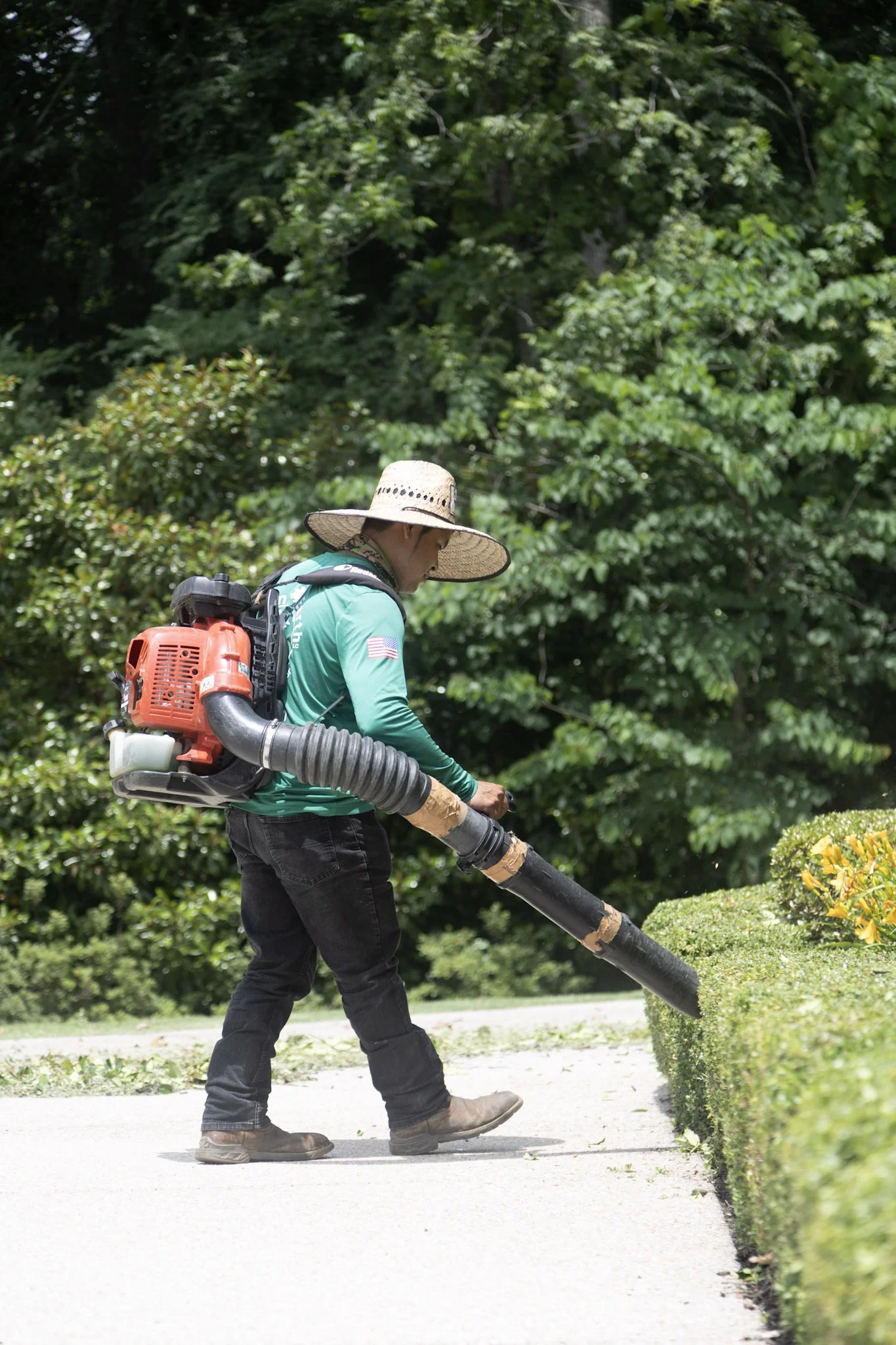
A thin, scattered layer of leaves, roughly anything covering less than 20 percent of the visible grass, can usually be mulched right in place with a mower on a mulching setting, chopped fine enough to break down and return nutrients to the soil. Once leaves are covering more than that, mulching in place stops helping and starts smothering, and it's time to bag or blow them off the lawn entirely. Wet leaves are heavier and clump more than dry ones, so on a rainy Memphis fall it's often worth waiting a dry day or two between rain events before a full cleanup, both for your back and for how cleanly the leaves lift off the grass.
Pairing Leaf Cleanup with Fall Lawn Care
Fall cleanup timing overlaps with two other jobs on a Memphis lawn calendar. If you overseeded fescue in September (see Overseeding Fescue in Memphis: Why September Is the Window), keep leaf cover off those new seedlings especially closely, since young grass needs consistent light to establish before winter. And if fall cleanup is part of a bigger yard reset this season, our general yard clean-up guide covers the rest of the checklist, from beds to gutters.
When to Call Green Earth
If your property has more trees than you have weekends, or a wet fall keeps turning your leaf pile into a bigger job than you planned for, a crew can handle the full cleanup cycle so timing never becomes a guessing game. Green Earth's landscape maintenance plans cover recurring fall cleanup across Germantown, Collierville, Eads, Bartlett, and the greater Memphis area. Contact Green Earth today at (901) 657-3614 to get fall cleanup on the schedule before the leaves get ahead of you.
FAQ
How many times should I rake my yard in the fall?
Most Memphis yards need two real cleanups: a lighter pass in mid-to-late October and a main cleanup in the first two weeks of November once most leaves are down. Yards under heavy oak cover may need a third pass in late November.
Is it bad to leave leaves on the lawn over winter?
Yes, if the layer is heavy. A thick, wet mat of leaves left on bermuda or fescue for more than a few days blocks light and traps moisture against the grass, which can lead to brown patch, snow mold, and thin or yellow spots that are slow to recover in spring.
Can I just mulch leaves with my mower instead of raking?
Only if the layer is light, generally under 20 percent lawn coverage. A mulching mower can chop thin leaf cover fine enough to break down and feed the soil. Once leaves are thicker than that, mulching in place stops helping and the leaves need to come off the lawn.