
Quick Answer
- The best window to overseed fescue lawns in Memphis is early September through mid-October, giving new grass 6 to 8 weeks to root before the first hard freeze.
- Core aerate before you seed. Memphis clay compacts hard by late summer, and seed that lands on compacted soil or thatch never makes contact with dirt.
- Water lightly once or twice a day for the first 10 to 14 days until germination, then taper back as roots establish.
- Skip any pre-emergent weed control in the weeks around seeding. It stops crabgrass and it will stop your new fescue too.
If your fescue lawn looks thin, patchy, or overrun with bermuda by late summer, September is when you fix it. Fescue is a cool-season grass, and it spends every Memphis summer losing ground to heat, humidity, disease, and bermuda encroachment. Fall is the one stretch of the year when soil and air temperatures both favor new seed taking root, and the window is short enough that missing it means waiting a full year for another shot.
Why Fescue Needs Overseeding Every Fall
Fescue doesn't spread the way bermuda or zoysia does. It doesn't send out runners to fill in bare spots on its own, so every blade that dies from summer heat stress, brown patch fungus, foot traffic, or shade competition stays dead until something new is planted there. A Memphis summer is hard on fescue by design: 90-degree days, humid nights, and clay soil that holds water at the surface and bakes hard everywhere else. By late August, most fescue lawns in Germantown, Collierville, and the surrounding area have thinned out enough that bermuda or weeds have started moving into the gaps. Overseeding in fall is how a fescue lawn stays a fescue lawn instead of slowly turning into a patchwork of whatever fills in on its own.
The Right Window for Memphis: Early September to Mid-October
Fescue seed germinates and roots best in soil temperatures between 50 and 65 degrees, which lines up with early September through mid-October in West Tennessee most years. That gives new grass 6 to 8 weeks of root development before the ground gets cold enough to stop growth for winter. Seed too early, while August heat is still hanging on, and a lot of it either fails to germinate or germinates into seedlings too weak to survive a late heat spike. Seed too late, past mid-October, and the roots don't have enough time to establish before winter dormancy, leaving a thin stand that struggles the following summer. West Tennessee can run a little later than Middle or East Tennessee, but mid-October is a reasonable outer edge to plan around, not a target to aim for.
Core Aerate Before You Seed
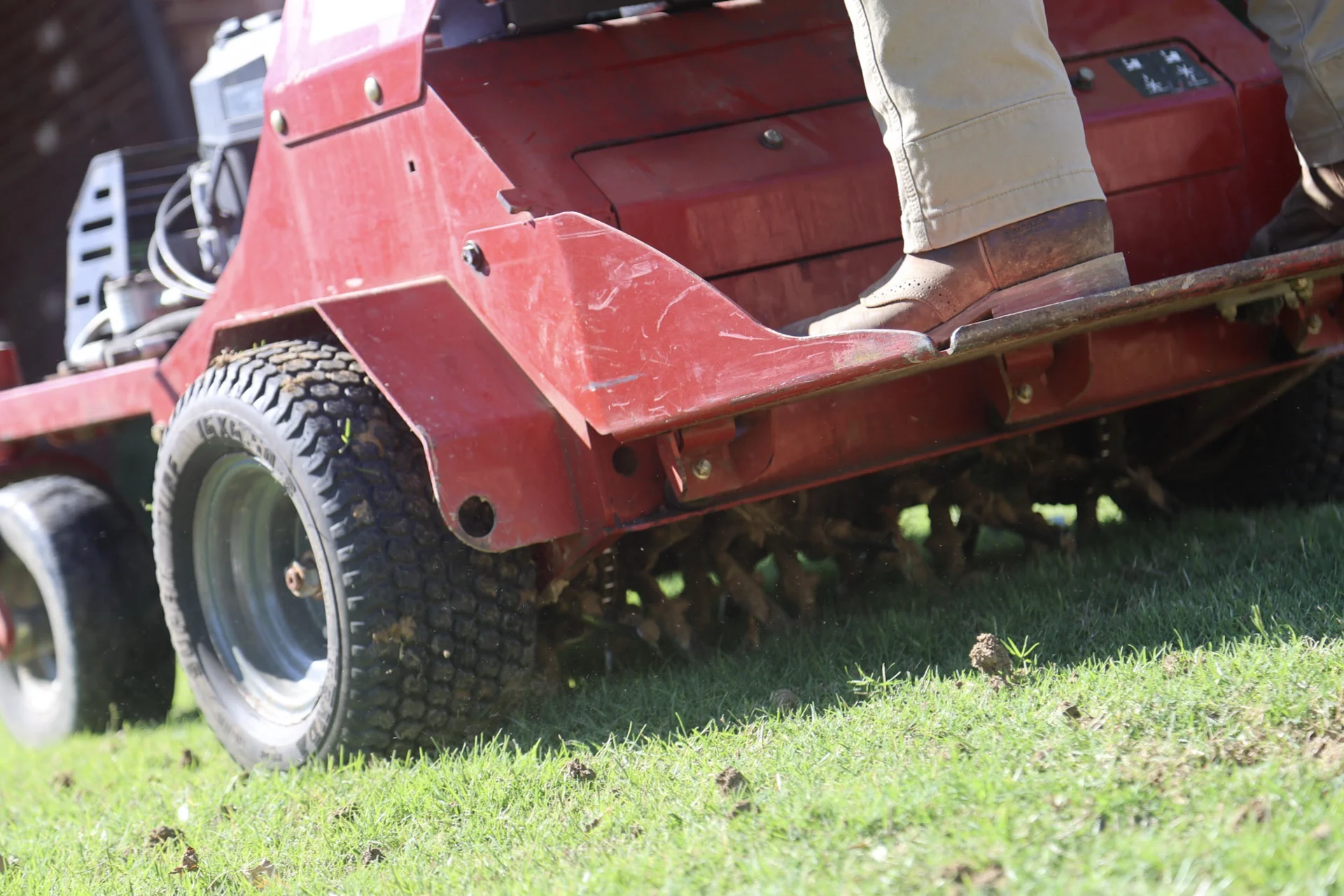
This is the step that gets skipped the most, and it's the one that determines whether the seed actually works. Memphis lawns sit on heavy clay that compacts under normal foot traffic and a summer's worth of mowing, and compacted soil doesn't let seed reach dirt. Seed that lands on top of compacted soil or a layer of thatch just sits there, dries out, and gets eaten by birds instead of germinating. Core aeration pulls actual plugs of soil out of the lawn, breaking up compaction and opening channels where seed can settle in and make real contact with the ground. Aerate first, then overseed right behind it, ideally the same day or within a day or two while the holes are still open.
Watering and Mowing After You Seed
New fescue seed needs consistent surface moisture to germinate, which means light, frequent watering rather than a single deep soak. Plan on watering once or twice a day for the first 10 to 14 days, just enough to keep the top half inch of soil damp, not saturated. Once you see consistent germination, cut back to every other day, and once the new grass has been mowed two or three times, taper toward a normal deep-and-infrequent watering schedule. Hold off mowing until the new grass reaches about 3.5 to 4 inches, then cut it back down to a normal 3 to 3.5 inch fescue height. Keep mower blades sharp during this stretch. Seedling grass is fragile, and a dull blade tears young blades instead of cutting them cleanly.
Common Mistakes That Waste the Seed
The two most common ways Memphis homeowners lose an overseeding investment both happen before the seed ever hits the ground. Skipping aeration is the first, seed on compacted clay simply doesn't take at the rate it should. The second is applying a fall pre-emergent for winter weed control at the same time as overseeding. Pre-emergent herbicides work by stopping seeds from germinating, and they don't know the difference between a crabgrass seed and the fescue seed you just put down. If a fall pre-emergent application is part of your normal program, it needs to happen either well before overseeding or several weeks after the new grass has been mowed a few times, not on the same weekend. Underwatering during the first two weeks and mowing too short too early round out the list. Both are avoidable with a simple schedule.
When to Call Green Earth
Overseeding sounds simple, but the timing window is short, and the sequence of aeration, seeding, starter fertilizer, and watering has to happen in the right order to actually work. Green Earth's maintenance team can time your lawn's core aeration and overseeding to hit the right week for your yard's sun exposure and soil, then get you on the right watering schedule so the investment actually takes root. We serve Germantown, Collierville, Cordova, and the greater Memphis area. Call (901) 657-3614 or request a free estimate through our landscape maintenance program to get on the fall schedule before the window closes.
How much fescue seed do I need to overseed a Memphis lawn?
For overseeding an existing, thinning fescue lawn, plan on roughly 6 to 8 pounds of seed per 1,000 square feet. A bare or heavily damaged area being reseeded from scratch needs closer to 8 to 10 pounds per 1,000 square feet to establish a full stand.
Can I overseed a bermuda or zoysia lawn with fescue?
Not really, and it's usually not worth trying. Bermuda and zoysia are warm-season grasses that go dormant and turn brown in winter, while fescue stays green. Overseeding a warm-season lawn with fescue creates a lawn that's two different colors and two different textures for most of the year rather than fixing anything. Overseeding makes sense on lawns that are already primarily fescue and have thinned out.
Do I need to wait for bermuda to go dormant before I overseed fescue?
No, and waiting for dormancy actually pushes you past the good seeding window. Fescue overseeding happens in September and October while bermuda is still green and growing. What matters more is not applying pre-emergent weed control at the same time, since it will block your fescue seed right along with any weed seed.