If you are evaluating an underground sprinkler system for your property, expecting a single flat rate can be misleading. Every yard has unique contours, water pressure constraints, and landscape needs.
After 14 years of designing and installing commercial and residential systems, here is an accurate, transparent breakdown of what a professionally installed irrigation system costs, what drives the price up, and how to spot costly shortcuts.
The Baseline: Real-World Installation Costs
A professionally installed residential irrigation system typically starts at $3,950 for a smaller footprint. For standard suburban properties, such as those across Germantown and Collierville requiring 8 to 14 zones, the total investment generally falls between $9,000 and $15,000+.
Base Controller: $650
Licensed Master Plumbing & Backflow Connection: $1,400 (includes municipal permits)
Average Cost Per Zone: ~$950 per zone
Key Factors That Impact Your Total Price
1. Property Obstacles & Site Conditions
Subsurface conditions directly affect labor. Crossing concrete driveways or brick walkways requires horizontal directional drilling (boreshots). Navigating heavy tree root networks, rocky soil, or dense underground utility corridors will also increase installation complexity.
2. Head Types & Water Volume (GPM & PSI)
Proper design matches head selection to your property’s available water pressure (PSI) and flow rate (Gallons Per Minute):
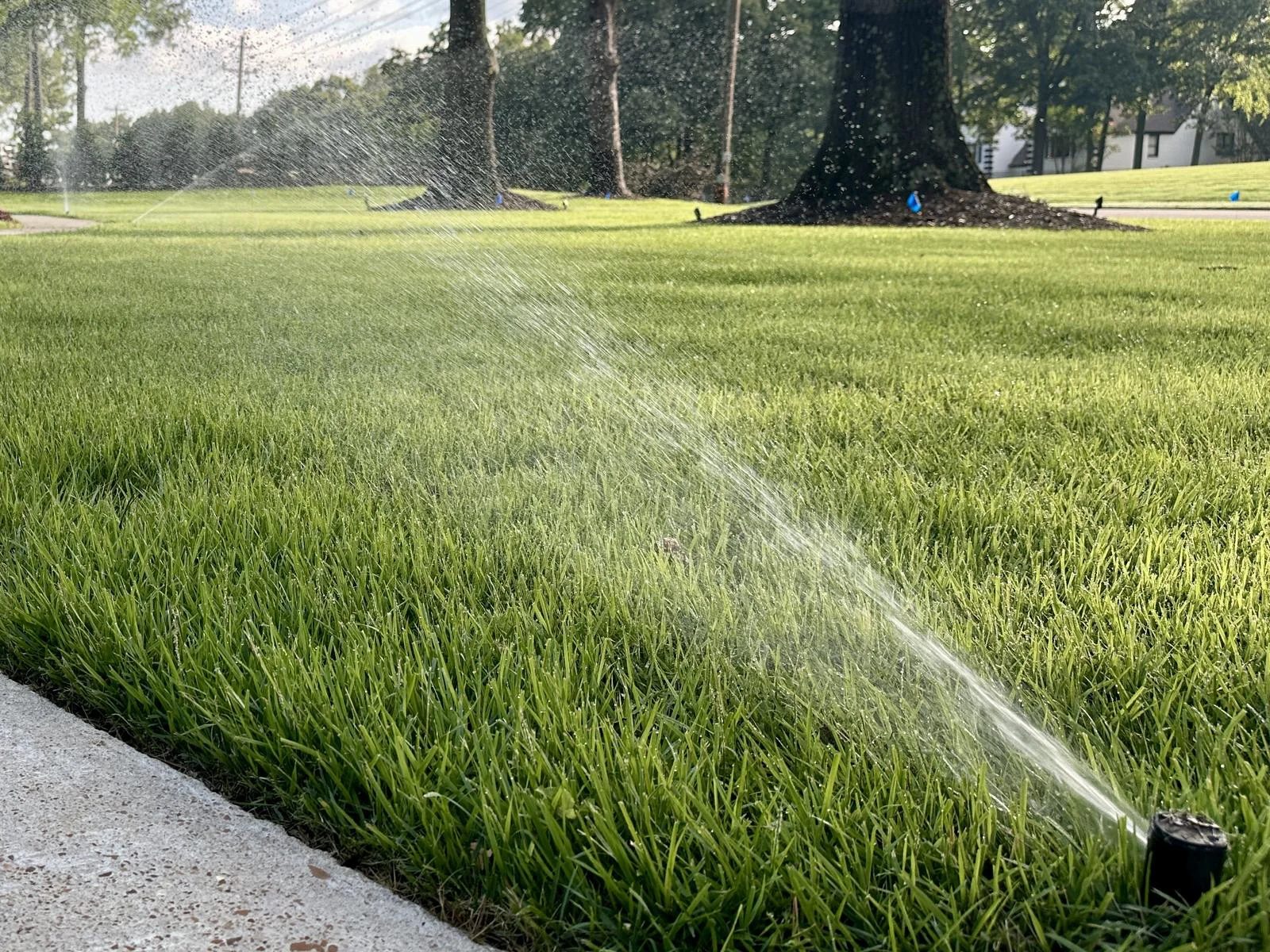
Rotor Heads: Used for large, open lawn areas. They cover greater distances, reducing total head count.
Spray Heads: Used for tight lawn sections and flowerbeds to deliver concentrated watering.
Commercial 2-Wire Systems: Used for larger residential footprints. Two-wire decoder systems use larger pipe diameters to optimize GPM and offer seamless flexibility for future zone additions.
3. Optional Technology & Efficiency Upgrades
Smart Wi-Fi Controller: $650 (enables real-time weather tracking)
Flow Sensor: $400 (detects underground line breaks and auto-shuts off water)
Wireless Rain Sensor: $135 (prevents watering during rainfall)
Wi-Fi Module: $150
Landscape Bed Drip Lines: Starts at $150 (delivers micro-drip water straight to plant roots)
Red Flags: Why Lowball Quotes End Up Costing More
When comparing contractor quotes, a bid that comes in thousands lower than average usually indicates significant trade-offs:
The Change Order Trap: Contractors bid low to secure the job, then issue expensive change orders halfway through execution once your lawn is already dug up.
Insufficient Head Coverage: Skimping on the number of heads per 1,000 square feet breaks “head-to-head” coverage, leaving dry spots and requiring costly retrofits later.
Unlicensed & Uninsured Labor: Irrigation involves trenching near gas, electric, fiber optic, and main water lines. Hiring uninsured installers or skipping licensed plumbing permits risks severe property damage and code violations.
Annual Maintenance & Long-Term Lifespan
A commercial-grade residential system can remain functional for decades, some well-maintained systems date back to the 1990s. To protect long-term operation, budget for routine yearly maintenance:
Pressurizing: $125
Backflow testing: $125
Winterizing: $125
Irrigation Inspection: $145
(Note: Quality installers typically include all first-year maintenance free of charge to protect the system warranty.)
The Financial Return: Why Irrigation Pays for Itself
30% to 50% Water Savings: Smart controllers and rain sensors eliminate overwatering compared to drag hoses.
Plant Protection: Prevents thousands of dollars in replacement costs for mature trees, shrubs, and sod lost during summer heatwaves.
Disease Prevention: Targeted drip lines keep plant foliage dry, preventing fungal diseases while starving surface weed seeds.
Time & Appraisal Value: Reclaims 3 to 5 hours of manual hose-moving per week, waters during peak absorption hours (4 AM to 6 AM), and recovers up to 100% of its cost in property appraisal value.