Stepping outside during a Mid-South summer to find your grass turning brown is a scenario every homeowner wants to avoid. After 14 years of diagnosing residential and commercial irrigation systems across Memphis, Germantown, and Collierville, we've found that most sprinkler breakdowns stem from a few predictable electrical or hydraulic failures.
Below is a quick diagnostic breakdown to help you identify why your sprinkler system isn't working, how to fix it, and when to bring in a professional.
Quick Summary & Key Takeaways
Key diagnostic takeaways from Green Earth LLC's 14+ years of Mid-South irrigation experience:
- Entire System Dead: Check your main water shutoff valve near the street or backflow first, then test controller output modules.
- Single Zone Dead: Indicates a burned-out solenoid coil or corroded wire connection at the valve.
- Zone Won't Turn Off: Caused by debris trapped inside the valve diaphragm chamber (a "stuck valve").
- Low Water Pressure Across All Zones: Points to a main line leak or a partially closed backflow shutoff valve.
- When to DIY vs. Call a Pro: Surface head replacements are easy DIY projects. Wire tracing, main line repairs, and valve rebuilds require specialized diagnostic equipment.
Issue #1: Why Won't My Entire Sprinkler System Turn On?
If your controller powers on and runs through its cycle but no water hits the lawn, the failure is located at the primary water supply or the main electrical output.
Step 1: Check the Main Water Supply & Backflow Assembly
Verify that your main irrigation shutoff valve (located near the street water meter) and both handles on your backflow preventer assembly are turned 100% open. Municipal water line repairs, winterizations, or accidental handle bumps frequently shut off water to the entire system.
Step 2: Test Controller Station Modules
If the water supply is open, the issue is electrical. Irrigation controllers send a 24-volt AC signal from internal station modules down to the subterranean valves. Lightning power surges, age, or internal component failure can kill an individual station module or the main transformer. If a multimeter shows no voltage output from the terminals during a manual run, the module or controller needs replacement ($50–$150 for modules).
Issue #2: Why Is One Sprinkler Zone Stuck On or Not Turning On?
When most of the lawn receives water but one specific zone stays dry (or continues running non-stop), the issue lies at that zone's subterranean valve.
- Zone Won't Turn On (Bad Solenoid or Wiring): The solenoid is the cylindrical electrical component mounted on top of the valve. If the internal coil burns out or the underground wire nut corrodes, the valve remains locked shut.
- Zone Won't Shut Off (Stuck Valve Diaphragm): If water flows through a zone even when the controller is powered down, sand, tiny pebbles, or lawn debris have gotten trapped under the internal valve diaphragm, preventing it from sealing shut.
How to Fix a Stuck Valve: Simply turning the manual bleeder screw on top of the valve won't remove debris. You must shut off the main irrigation water supply, unbolt the valve bonnet (top cap), and physically flush out the diaphragm assembly and valve body before reassembling. If the rubber diaphragm is torn or warped, install a replacement diaphragm kit.
Issue #3: Why Does My Sprinkler System Have Low Water Pressure?
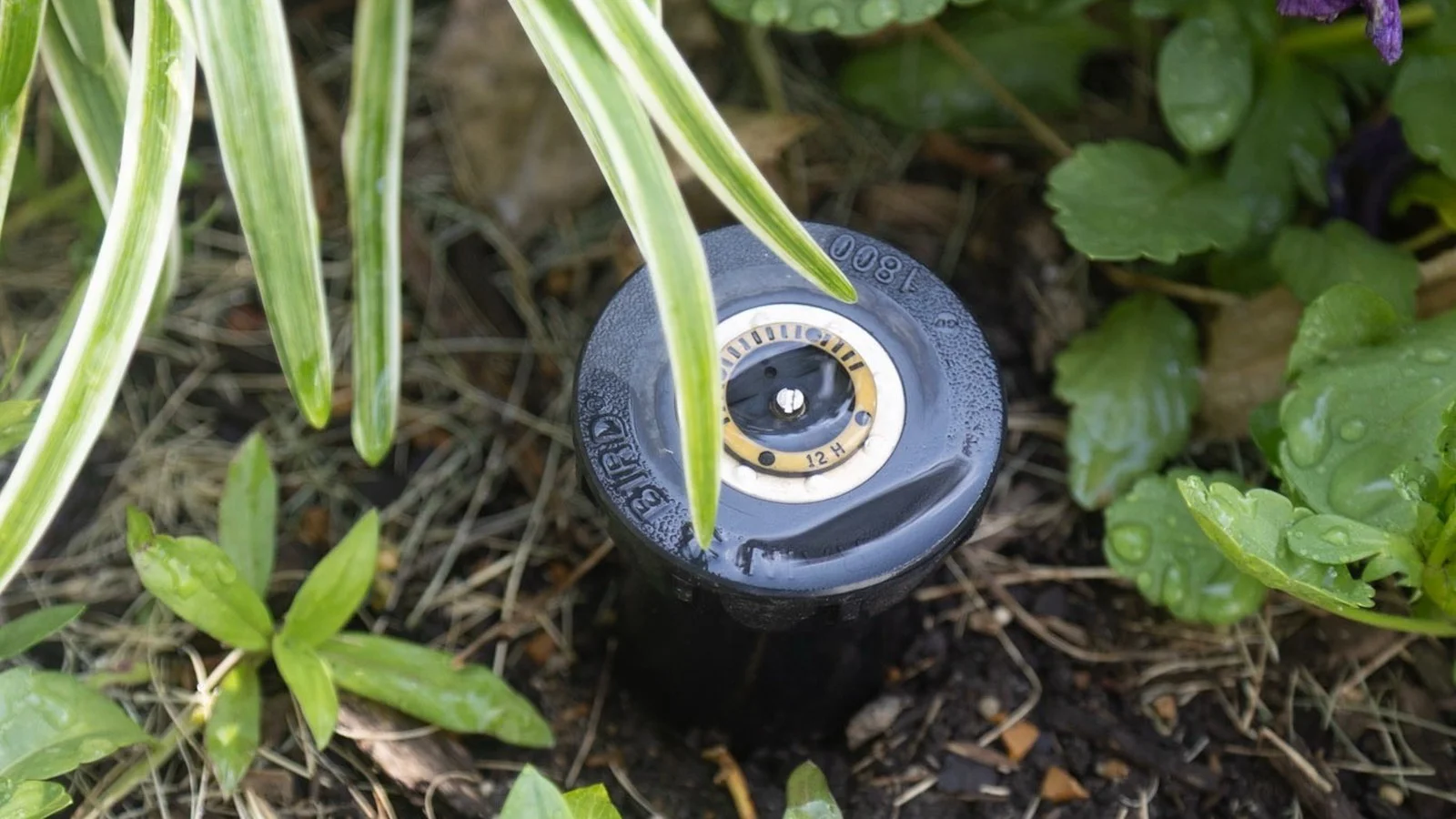
Low water pressure keeps pop-up heads from rising fully, causing water to dribble around the base rather than casting a uniform spray pattern.
Main Line Leaks vs. Lateral Line Leaks
- Main Line Leaks (All Zones Affected): Main lines stay under constant pressure up to the valves. A break in the main line causes a sudden drop in pressure across all zones and creates a standing pool of water in the lawn even when the system is turned off.
- Partially Closed Valves (All Zones Affected): If pressure is low across all zones without visible standing water, double-check that your backflow ball valves aren't sitting at a 45-degree angle. A partially closed valve severely chokes flow rate (GPM).
- Lateral Line Leaks (Single Zone Affected): Lateral lines carry water from the valve out to the heads only when that specific zone is active. If only Zone 3 is sputtering, a pipe fitting has cracked or a pipe has been severed in that specific zone.
Issue #4: How Do I Fix Misdirected Spray, Stuck Heads, or Clogged Nozzles?
Damaged or misaligned heads waste thousands of gallons of water per season by spraying driveways, fences, and brick walls instead of turf roots.
| Problem | Root Cause | Professional Solution |
|---|---|---|
| Overspraying Pavement | Misaligned nozzle arc or wrong head choice (e.g., rotor installed in spray zone). | Adjust nozzle arc screw or replace head with proper radius nozzle. |
| Head Won't Pop Up | Internal riser wiper seal wear, sand grit in cap, or lateral line pressure drop. | Unscrew top cap, flush riser body, or replace worn pop-up assembly. |
| Uneven Spray / Dry Arc | Clogged internal nozzle filter basket or mineral build-up. | Replace clogged nozzle ($3 part) rather than spending hours soaking it. |
Field Service Pro-Tip: Homeowners often spend hours trying to soak and clean tiny plastic clogged nozzles in vinegar. Because replacement nozzles cost roughly $3 at supply houses, we simply swap them out during service calls. It ensures precise precipitation rates and saves labor costs.
Issue #5: How Do I Prevent Freeze Damage & Perform Spring Startup Checks?
In the Mid-South, unexpected winter freezes are the primary cause of major spring backflow failures.
Cracked Backflow Ball Valves
The most common sprinkler repair we see during spring startups on new client properties is a split brass backflow ball valve. This happens when systems are improperly winterized, leaving trapped water inside the brass housing to freeze and expand. Always ensure your system is winterized using high-volume commercial air compressors to clear all water from the assembly.
Seasonal Startup Checklist
- Audit Head Alignment: Ensure lawnmowers haven't spun spray heads toward concrete or structures.
- Review Controller Memory: Modern smart controllers (Rachio, Hydrawise, Rain Bird ESP-ME3) save schedules to non-volatile memory or the cloud. If you use an older traditional controller, replace the 9V backup battery so custom programs aren't erased during summer thunderstorms.
- Set Deep, Infrequent Watering: Program zones to run early in the morning (4:00 AM – 6:00 AM). Watering deeply fewer days per week encourages deep root systems and prevents fungal issues like brown patch.
Case Study: How Diagnostic Equipment Saved a Germantown Homeowner Hundreds
Having specialized diagnostic gear makes a massive difference in repair bills.
A homeowner in Germantown recently called us after receiving an estimate from another company claiming three main underground valves needed to be excavated and replaced, a repair quoted at several hundred dollars.
Our technician connected a professional electronic wire tracer and digital multimeter to the controller harness. Within 10 minutes, we identified that all three valves and subterranean field wires were in perfect working order. The actual failure was a single burnt-out station output module in the controller.
We replaced the $50 internal module on the spot, restored the entire system that afternoon, and saved the homeowner hundreds of dollars in unnecessary yard excavation and valve replacements.
DIY vs. When to Call a Licensed Professional
- Safe for DIY: Replacing a broken pop-up spray body near the surface, tweaking spray nozzle arcs with an adjustment key, or clearing surface debris around heads.
- Call a Licensed Pro: Tracing cut valve wires (frequently severed by core aerators or landscape edging), repairing pressurized main lines, rebuilding valve bodies, or repairing backflow preventers.
Working near subterranean utility lines (gas, electric, water, and high-speed fiber) requires licensed, insured contractors equipped with wire locators to prevent costly utility strikes.
Maintaining Turf Health During Mid-South Heatwaves
When summer temperatures climb and rainfall drops off, turf stress shows up quickly. Localized brown patches usually point to improper zone run times, incorrect nozzle precipitation matching, or a valve failing to open completely.
Running a monthly zone audit throughout the summer keeps your lawn healthy and catches minor leaks before they impact your water bill.
Evaluating costs for system upgrades or a new installation? Read our detailed guide on How Much Does an Irrigation System Cost?
Schedule an Irrigation Diagnostic Evaluation
If your sprinkler system isn't operating efficiently or you need an expert team to troubleshoot an issue in Memphis, Germantown, or Collierville, contact Green Earth LLC today (901)-657-3614.