Quick Answer
Brown patch is a fungal disease, not drought stress. It thrives when nighttime temperatures stay above 68°F with high humidity—which is exactly what late July through September in Memphis delivers.
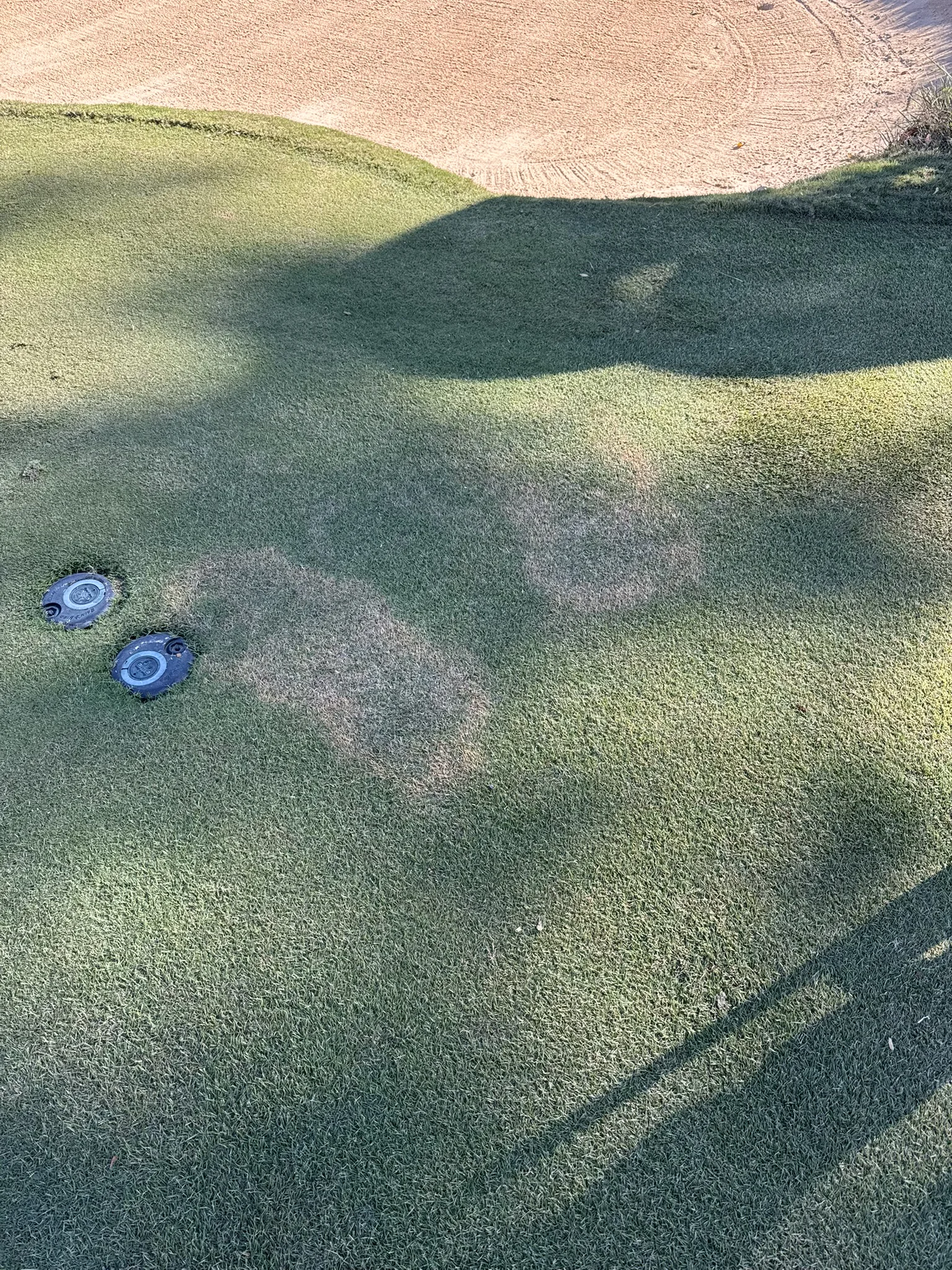
Look for roughly circular patches of tan or brown grass. In the early morning light, you can often spot a thin, gray "smoke ring" around the edges.
Stop evening watering and hold off on nitrogen fertilizer immediately. Both of these just feed the fungus.
Most lawns recover in 2 to 4 weeks once conditions dry out and watering habits change. Fungicides speed up the process, but they won't fix a watering problem on their own.
Brown patch is a fungal disease, not a drought issue—and late summer in Memphis is its absolute favorite time to show up. If your fescue or bermuda grass suddenly develops roughly circular patches of tan or brown grass that seem to pop up almost overnight (especially after a string of hot, humid nights), you're most likely looking at brown patch (Rhizoctonia solani). It's incredibly common to mistake this for heat stress, grub damage, or a sprinkler zone that just isn't covering enough ground, but the causes and solutions are very different.
What Brown Patch Actually Looks Like
Brown patch typically appears as circular or irregular patches of dead turf, ranging anywhere from 6 inches to several feet across. The most frustrating part? They can seem to appear literally overnight after a humid stretch. If you get out early in the morning before the sun burns the dew off, you'll often see a thin grayish or purplish "smoke ring" around the active edge of the patch. That's the fungus itself, actively growing and spreading. If you look closely at the individual blades of grass, you'll notice tan lesions with darker borders—which looks very different from the uniform, crispy brown of drought stress. You'll usually spot these patches starting in low spots, heavily shaded areas, or anywhere your turf is thick and air can't easily flow through.
Why Memphis Lawns Get It Right Now
The fungus that causes brown patch actually lives in our Mid-South soil all year long. It just stays dormant until the conditions are right in its favor. Unfortunately, late summer in Memphis checks every single box: nighttime temperatures hovering above 68°F, heavy humidity, and afternoon pop-up storms that leave the grass wet well into the night.
Watering in the evening only makes things worse because it keeps the grass canopy damp all night instead of letting it dry out before dark. Pushing nitrogen fertilizer late in the season is another major culprit. Nitrogen encourages soft, rapid growth, making the grass highly vulnerable to disease right when the fungus is most active. Finally, a thick layer of thatch or overgrown shrubs crowding your lawn's edges can trap moisture and block the airflow your grass desperately needs to dry out.
Brown Patch vs. Drought Stress vs. Grub Damage
These three issues are constantly confused with one another, and treating for the wrong one wastes your time and money while your lawn continues to struggle. Here is how to tell them apart:
Drought stress tends to spread more evenly across areas exposed to full sun and thins out gradually, rather than popping up overnight in distinct circles. The grass blades will dry out and roll inward, but you won't see any "smoke rings" or lesions on the blades.
Grub damage creates patches of dead grass that pull up easily like a loose piece of carpet because the grubs have actually eaten the roots underneath. Give a suspicious patch a tug: if it lifts right up with little to no root attached, you have grubs, not a fungus. Grub activity in Memphis usually peaks a bit later in the season, making late July and August a tricky overlap window where either issue is possible. Why is my grass turning brown this summer? A Germantown Guide
Brown patch, on the other hand, keeps its roots intact. The damage happens to the blades and the crown, so the grass stays firmly rooted in the soil. That circular shape with the smoke-ring border is your biggest giveaway.
How to Stop It From Spreading
Adjusting your watering habits is the single biggest lever you can pull. Always water early in the morning—ideally before 10 AM—so your grass has the entire day to dry out before evening. Never water in the evening if you have an active fungus outbreak. Overwatering is already a huge trap for Memphis lawns in general The June Overwatering Trap it's practically jet fuel for brown patch.
Next, cut back on nitrogen fertilizers until the patches clear up. Once the temperatures cool down in the fall, you can switch back to a lower-nitrogen, potassium-rich feed. It also helps to raise your mower deck slightly and make sure your blades are sharp; dull blades tear the grass tissue, giving the fungus an easy entry point. If you have shrubs or overgrown garden beds crowding the edges of your lawn, pruning them back will improve airflow and help the grass dry out faster after a rain.
You can use homeowner fungicides (look for chlorothalonil or propiconazole) to knock back a small, early patch, but timing and reapplication are tricky. It’s easy to under-treat a spreading patch or over-treat a lawn that didn't really need it. For more established outbreaks—or if your fescue is already exhausted from the summer heat—a professionally timed treatment will help you get ahead of the disease cycle rather than just chasing it.
When to Call Green Earth
If you aren't completely sure whether you're looking at brown patch, drought stress, or something else entirely, getting a second set of trained eyes is always worth it. Our maintenance team at Green Earth can figure out exactly what's going on in your yard and get the right treatments and watering adjustments scheduled quickly before the problem spreads across your whole lawn. We proudly serve Germantown, Collierville, Cordova, and the greater Memphis area. Call us at (901) 657-3614 or request a free estimate through our landscape maintenance plan to have us take a look!
FAQ
Will brown patch kill my lawn?
Usually, no. In most cases, brown patch only damages the grass blades, not the crown or the root system. An affected lawn will typically recover once the weather changes and watering habits are corrected. However, if left untreated over multiple seasons, repeated outbreaks can thin out your turf and open the door for weeds to take over.
How long does brown patch last in a Memphis lawn?
Most patches will clear up in about 2 to 4 weeks once nighttime temperatures drop or you fix your watering routine. A well-timed fungicide application can speed up this recovery, which is especially helpful for lawns already stressed out by the intense summer heat.
Can I treat brown patch myself, or do I need a professional?
Small, early patches often respond well to a store-bought fungicide, provided you also correct your watering habits. But for larger, spreading outbreaks—or a lawn that's already struggling—you'll get much better results with a professional treatment that's specifically timed to break the disease cycle, rather than using a guess-and-check approach.