If your Germantown lawn is turning brown in the summer, the most common cause is uneven or insufficient watering, not the heat by itself. In our Mid-South summers, grass browns fastest in the exact spots where irrigation coverage falls short, so the pattern of the browning tells you a lot about what is actually wrong.
Read the Browning Pattern First
Random brown patches next to healthy green usually point to an irrigation problem: a clogged or misaligned sprinkler head, a coverage gap between zones, or low water pressure that keeps the spray from reaching the edges. If the whole lawn fades evenly to a straw color, that is more likely heat and drought stress, or a cool-season fescue lawn going dormant. Circular tan patches that appear overnight can signal a fungal disease such as brown patch, which our humid Germantown summers encourage.
Water Deep, Early, and Less Often
Most Germantown lawns need about 1 to 1.5 inches of water per week in summer, delivered in two or three cycles rather than a light daily sprinkle. Watering between 4 a.m. and 8 a.m. limits evaporation and gives blades time to dry, which lowers fungal pressure. Short, frequent watering trains roots to stay shallow, right where our clay-heavy soil bakes hardest, so the lawn browns at the first stretch of heat.
Know Your Grass Type
Warm-season lawns like Bermuda and zoysia are built for our heat and bounce back with proper water. Cool-season fescue struggles in July and August and can brown or thin even when you are watering, because it is simply out of its comfort zone. Knowing which one you have changes both the watering plan and your expectations.
Cycle and Soak for Clay Soil
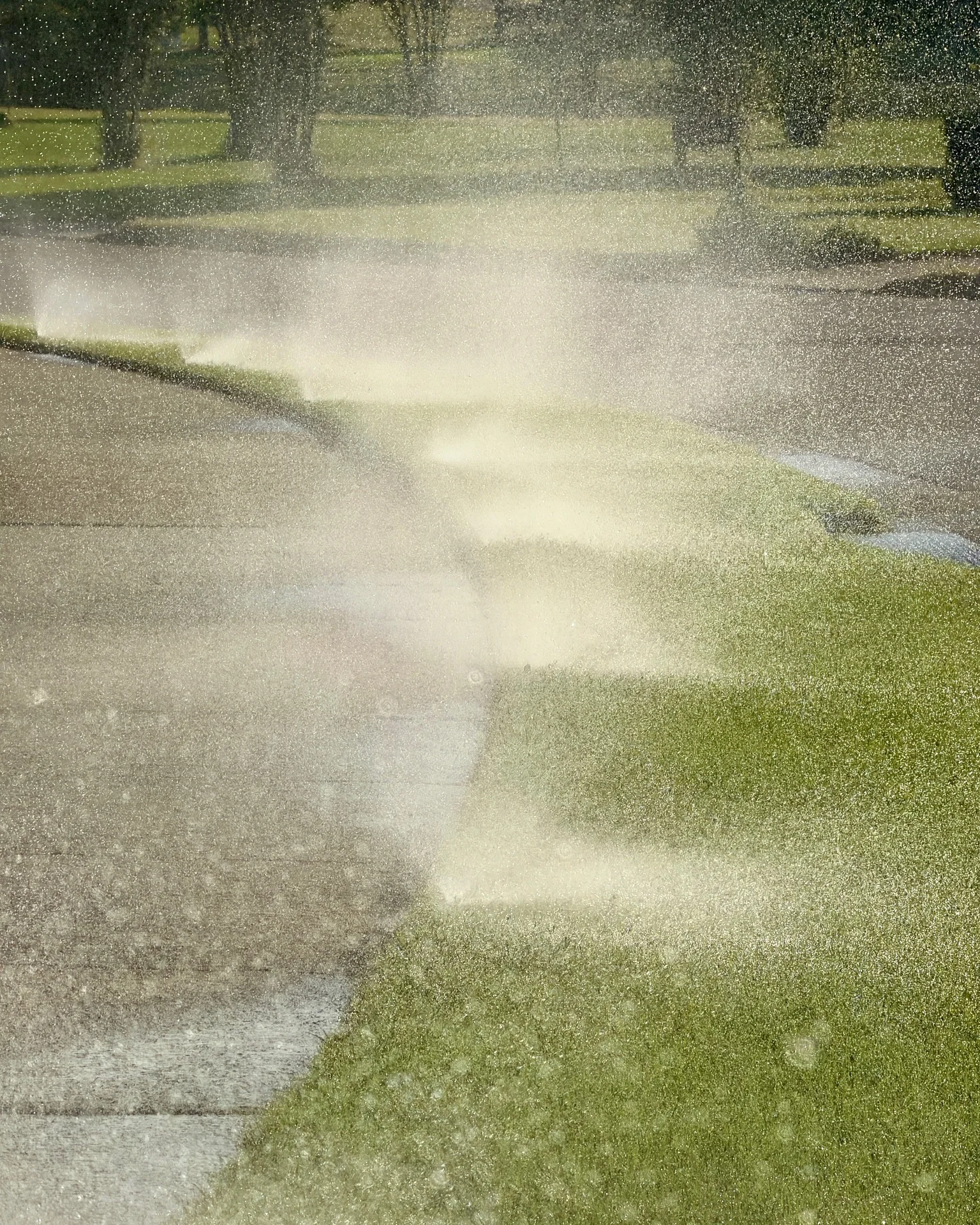
Germantown's tight clay cannot absorb water as fast as a sprinkler delivers it, so much of it runs off into the street or low spots before it reaches the roots. Splitting each zone into two or three shorter cycles, a few minutes apart, lets the first pass wet the surface and the next ones soak in. This single change is often the difference between a green lawn and a runoff bill.
Problems Watering Cannot Fix
Uneven green-and-brown striping usually means poor head spacing or a coverage gap, not a schedule issue. Dry spots right next to soggy spots point to a broken head, a clogged nozzle, or a zone running at the wrong pressure. Spongy patches that pull up easily can mean grubs, and fast-spreading circles can mean disease. No amount of extra watering corrects these, and watering more can actually make the disease worse.
When to Call a Professional
If you have adjusted your schedule and the brown areas keep returning in the same places, the cause is almost always in the system, not the sky. Green Earth LLC audits Germantown irrigation systems head by head, corrects coverage and run times, checks pressure, and helps identify whether disease or pests are involved. As licensed irrigation specialists serving Memphis since 2012, we get your zones watering evenly so the whole lawn recovers, not just the parts the sprinklers happen to reach.
Do not wait for the brown to spread. Contact Green Earth today at (901) 657-3614, and we will get your Germantown lawn green and growing again.