
Driving around Memphis, Germantown, Collierville, and Cordova this fall, we're seeing dry, off-color evergreens on nearly every street. Some have already turned brown and won't make it through the winter.
Water established evergreens and hollies deeply about once a week when there has been no rain, aiming for roughly an inch of water from rain, irrigation, or a hose. Check the soil first: if it's dry a few inches down and the day is above freezing, water in the morning so it soaks in before the night gets cold. Deep and infrequent beats short and frequent every time.
Why Evergreens Are Struggling Around Memphis Right Now
This has been a hard year on trees. We went weeks at a time this summer without rain, and the dry spell kept going into fall. In late October, all of Shelby County was rated in extreme drought by the U.S. Drought Monitor. A couple of good rains in early November helped, but as of the November 10 map the whole county is still in drought.
Evergreens never fully shut down. Unlike an oak or a maple, they keep their leaves and needles all winter, and those leaves keep losing water on sunny, windy days. In our area, roots also keep growing through the cooler months whenever the ground isn't frozen. So a tree that goes into winter dry has no reserve, and that's when you start seeing it fade.
Which Trees Are Hit the Hardest
Leyland cypress and Green Giant arborvitae are the trees we see failing most this season. Many of them were already stressed coming out of the dry summer, and the ones going downhill usually have one thing in common: no drip irrigation or bubblers on the trees.
We don't see this every year. In a normal summer, rain carries these trees through. This year they simply didn't get enough water, and the damage is showing up now.
Hollies need attention too. Broadleaf evergreens like hollies and magnolias have more leaf surface losing water all winter, and they usually don't wilt the way a perennial does. They just dry out, brown, and drop leaves, so the warning signs are easy to miss.
How Often to Water Evergreens and Hollies in Winter
For established evergreens, here is the routine we recommend:
- Check the soil first. Pull back the mulch and push a finger or a long screwdriver into the soil a few inches. If it's moist, skip watering. If it's dry and hard, water.
- Aim for about an inch a week in a drought. That's roughly an inch from rain, irrigation, or both combined. In a normal winter with regular rain, established trees need much less, often only an occasional deep soak.
- Water in the morning. Pick a day that's above freezing and water early so the water soaks in before temperatures drop at night. Skip watering when the ground is frozen.
- Water deeply and slowly. Let a hose trickle at the base and out toward the edge of the branches so water soaks down at least six inches instead of running off.
- Don't forget the "established" trees. A tree that has been in the ground for years still needs water when it has not rained for weeks.
The Two Most Common Mistakes
The first mistake isn't watering at all because the tree is "established." Established means it can handle normal weather. It doesn't mean it can handle a drought like this one.
The second mistake is the opposite: watering too much and for too long, or a little bit every day. Constantly soggy soil can rot roots, and light daily watering keeps roots shallow. Water deeply, then let the soil dry before you water again.
If Your Sprinkler System Is Already Winterized
Most Memphis-area systems get winterized around mid-November, and from then on rain usually helps carry your trees. But keep an eye on the forecast. If it has been more than a week without rain, put a hose on your evergreens and hand water them.
Can a Brown Leyland or Green Giant Be Saved?
Honestly, if it has already turned brown, it's usually past the point of return. Leyland cypress and arborvitae don't grow new foliage from brown or bare wood, so the brown sections won't green back up.
How the tree browns tells you a lot:
- Uniform browning across the whole tree usually points to drought or root stress. That's what we're seeing most around town right now.
- Brown patches or single dead branches scattered through a Leyland often point to a canker disease such as Seiridium or Botryosphaeria. Drought makes trees much more likely to get these, but it's a different problem with a different fix, mainly pruning out infected branches and reducing stress.
- Some browning on the inside of the tree in fall is normal. Arborvitae and other conifers shed their oldest inner foliage every year. If the outer growth is still green, the tree is likely fine.
Not sure? Try a scratch test. Use your fingernail to scrape a little bark on a twig. Green and moist underneath means that part is alive. Brown and dry means it's dead.
Mulch Helps, but Not Too Much
Mulch holds moisture in the soil and insulates the roots through cold snaps. We recommend 2 to 3 inches spread out under the tree, as far toward the edge of the branches as you can.
What we strongly discourage is the "mulch volcano," where mulch is piled up against the trunk. Mulch packed against the trunk flare holds moisture on the bark, invites rot, and too deep a layer can starve the roots of air. Keep mulch pulled back a few inches from the trunk. For more on getting mulch right, see our guide to the importance of mulch for plant health and moisture retention.
How to Prevent This Next Time: Bubblers and Drip on Trees
After this summer, we now strongly recommend bubblers or drip lines on trees, and we have started adding them to every install where the homeowner's budget allows. A tree on its own bubbler gets a slow, deep soak right at the roots, which is exactly what Leylands and Green Giants needed this year and didn't get.
If you already have a sprinkler system, ask whether your trees are actually on a zone that reaches them. Spray heads set for turf often miss tree roots entirely. Our team can add bubblers or drip zones for trees and shrubs when your system starts back up in spring.
What to Plant If You Need to Replace a Tree
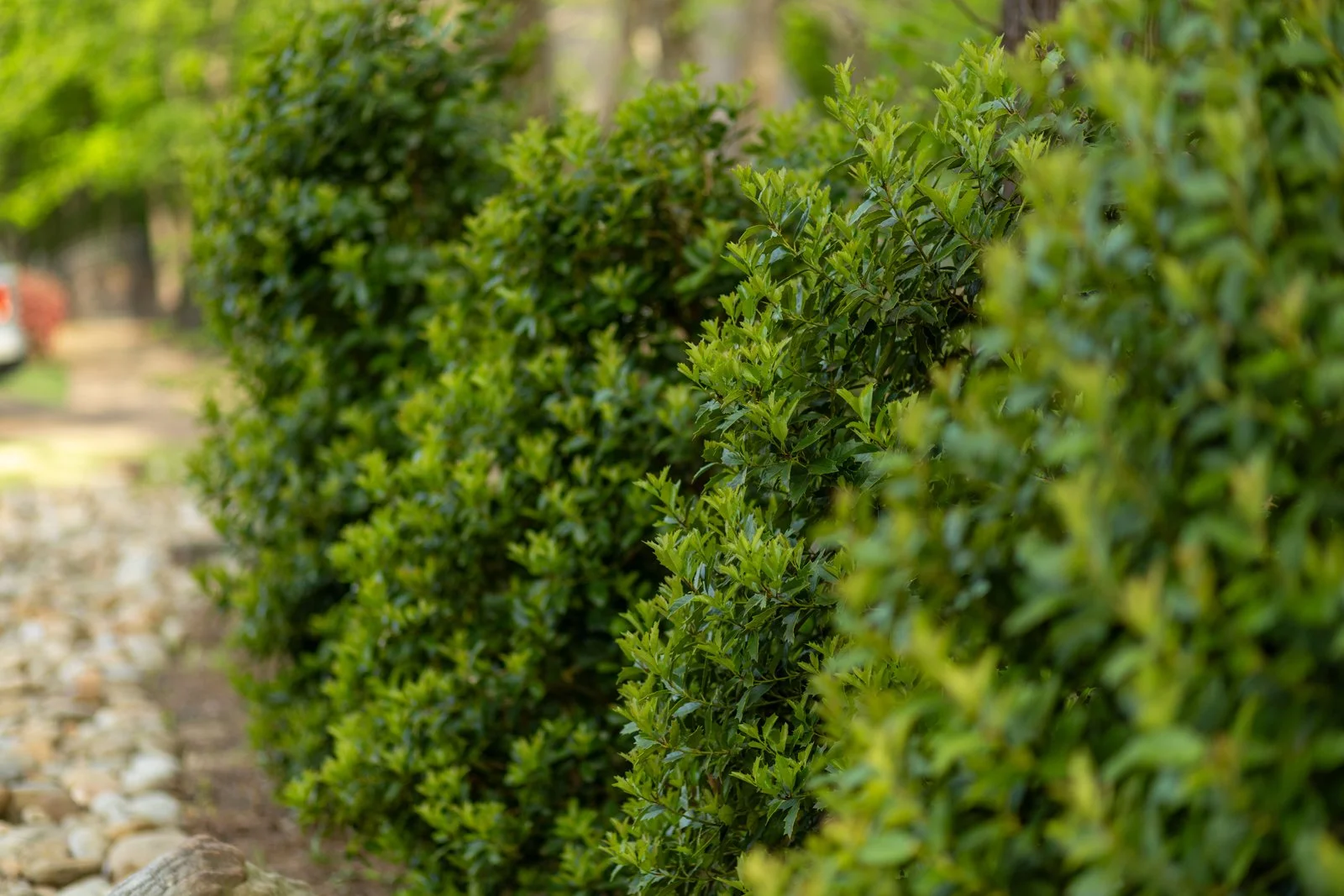
It depends on why the tree died. If it died from lack of water, there's really no reason not to go back with the same tree, as long as it gets watered properly this time. Some homeowners would rather have something more drought tolerant once they understand what happened, and a holly is a common pick. A Nellie Stevens holly privacy screen is a popular choice around Memphis and handles heat and dry spells better than many evergreens once it's established.
At the end of the day, everything needs a little bit of water. Whatever you plant, give it a way to get water during the next dry stretch.
When to Call Green Earth
Call us if you can't get water to your trees, for example when they sit far from a hose bib and your irrigation is already winterized for the season. Depending on conditions, we can come out and give the trees a deep watering and check whether they can still be saved. The goal is to relieve as much stress as possible and get them hardy for the winter. If a tree pulls through, wait until spring to fertilize, and only after it has had steady water and a soil test shows it needs a feeding. We can also talk through a longer-term plan, like bubblers on the trees, so you're not in the same spot next year.
Green Earth LLC serves Memphis, Germantown, Collierville, Bartlett, Cordova, and the surrounding area. Call (901) 657-3614 to set up a visit.
Green Earth LLC, 1183 Midas Cove, Cordova, TN 38018, (901) 657-3614
Frequently Asked Questions
How often should I water evergreens and hollies in winter in Memphis?
In a dry winter, check the soil about once a week and water established evergreens and hollies when it's dry, aiming for about an inch of water a week from rain and watering combined. In a winter with regular rain, they need much less.
What time of day should I water evergreens in winter?
Water in the morning on a day that's above freezing, so the water soaks into the soil before temperatures drop at night. Don't water frozen ground.
Will a brown Leyland cypress turn green again?
Usually not. Leyland cypress and arborvitae don't grow new foliage from brown or bare wood. If only some branches are brown and the rest is green, the tree may still be worth saving.
Should I water my trees after my sprinkler system is winterized?
Yes, if it has gone more than about a week without rain. Run a hose slowly at the base of the tree and out toward the edge of the branches until the soil is soaked several inches deep.